

Fluid stratification is a common phenomenon in various industrial processes and natural environments. It refers to the situation where a fluid medium is divided into layers with different physical properties, such as density, temperature, or composition, due to factors like gravity, temperature gradients, and chemical reactions. As a supplier of DP Type Density Meters, understanding the influence of fluid stratification on the measurement of these meters is crucial for ensuring accurate and reliable density measurements in different applications.
How Fluid Stratification Occurs
Fluid stratification can occur in many scenarios. In industrial settings, for example, in large storage tanks where different batches of fluids may have different densities, stratification can develop over time. In chemical processes, the reaction products may have different densities from the reactants, leading to layering within the reaction vessels. In the natural world, stratification is commonly seen in bodies of water, where the surface layer may be warmer and less dense due to solar heating, while the deeper layers are colder and more dense.
Impact on DP Type Density Meters
DP (Differential Pressure) Type Density Meters operate based on the principle that the pressure difference between two points in a fluid column is proportional to the density of the fluid. Specifically, the pressure difference (ΔP) is given by the equation ΔP = ρgh, where ρ is the fluid density, g is the acceleration due to gravity, and h is the vertical distance between the two measurement points.
Accuracy of Measurement
One of the primary impacts of fluid stratification is on the accuracy of the density measurement. When a DP Type Density Meter is installed in a stratified fluid, the measured pressure difference may not accurately represent the density of the entire fluid volume. For instance, if the two pressure taps of the meter are located in different density layers, the measured ΔP will be a combination of the densities of those layers, weighted by the height of each layer between the taps. This can lead to a significant error in the calculated density, as the meter assumes a homogeneous fluid density throughout the measurement height.
Calibration Challenges
Fluid stratification also poses challenges for the calibration of DP Type Density Meters. Calibration is typically performed using a homogeneous fluid with a known density. However, in a stratified environment, the actual fluid behavior may deviate significantly from the conditions under which the meter was calibrated. As a result, the calibration constants derived from the homogeneous fluid may not be applicable in the stratified situation, leading to inaccurate density readings.
Sensitivity to Stratification Changes
The density measurement of a DP Type Density Meter can be sensitive to changes in the stratification pattern. For example, if the stratification layers shift due to external factors such as agitation, temperature changes, or fluid flow, the pressure difference measured by the meter will change accordingly. These sudden or gradual changes in stratification can cause fluctuations in the density readings, making it difficult to obtain stable and reliable measurements.

Mitigation Strategies
As a supplier of DP Type Density Meters, we understand the challenges posed by fluid stratification and have developed several strategies to mitigate its impact on density measurements.
Proper Installation Location
Selecting the right installation location is crucial for minimizing the influence of fluid stratification. The pressure taps of the DP Type Density Meter should be placed in a region where the fluid is as homogeneous as possible. This may involve installing the meter in a well - mixed section of the process pipeline or using external means to promote fluid mixing near the measurement location.
Multiple Measurement Points
Using multiple DP Type Density Meters at different heights or locations can provide more comprehensive information about the fluid density profile. By comparing the density readings from different meters, it is possible to detect the presence and extent of fluid stratification. Advanced data processing algorithms can then be used to analyze these multiple measurements and calculate a more accurate average density of the fluid.
Real - Time Monitoring and Compensation
Implementing real - time monitoring systems can help detect changes in fluid stratification and compensate for their effects on density measurements. These systems can continuously analyze the pressure data from the DP Type Density Meter and adjust the density calculations based on the detected stratification patterns. This ensures that the density readings remain accurate even in the presence of dynamic stratification changes.
Applications and the Role of Our Products
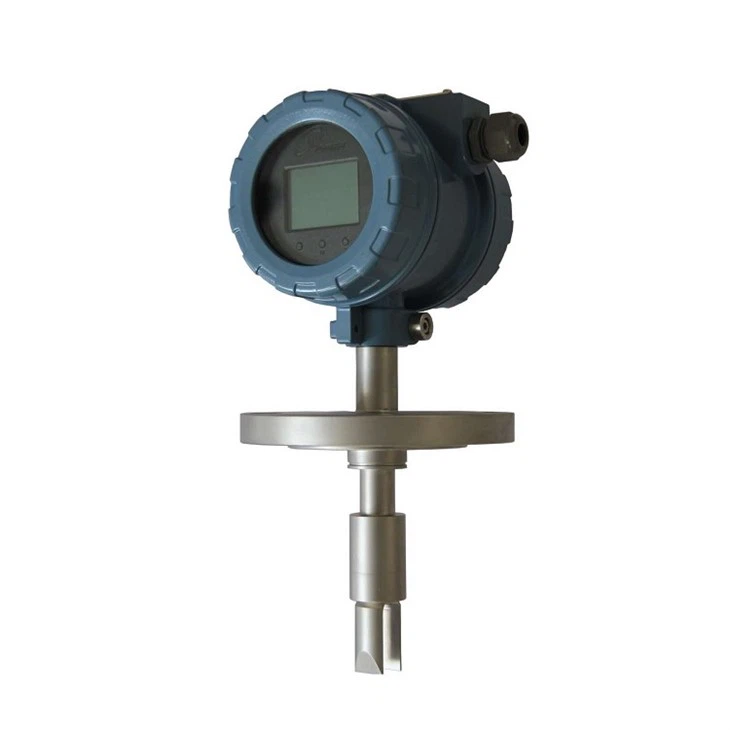
Our DP Type Density Meters, including the Liquid Density Meter, Fork Type Density Meter, and DP Type Liquid Density Transmitter, are designed to handle a wide range of applications, even in the face of fluid stratification.
In the food and beverage industry, for example, our density meters are used to measure the density of various products such as juices, milk, and beer. In these processes, fluid stratification can occur due to differences in sugar content, temperature, or sedimentation. Our meters, with their advanced measurement and compensation techniques, ensure accurate density measurements, which are essential for quality control and process optimization.
In the chemical industry, where fluid composition and density can vary significantly, fluid stratification is a common issue. Our DP Type Density Meters provide reliable density measurements, helping to monitor chemical reactions, control product quality, and ensure the safe and efficient operation of chemical processes.
Contact for Purchase and Consultation
If you are dealing with fluid density measurement in stratified fluids and are looking for reliable DP Type Density Meters, we are here to help. Our products are designed to provide accurate and stable density measurements, even in challenging environments. Whether you need to measure the density of liquids in industrial processes or in research applications, our team of experts can assist you in selecting the right product for your specific needs. We offer comprehensive after - sales support, including calibration services and technical consultations. Please feel free to reach out to us for more information and to start a discussion about your density measurement requirements.
References
- Miller, R. W. (1996). Flow measurement engineering handbook. McGraw - Hill.
- Spitzer, D. W. (2001). Industrial flow measurement. ISA - The Instrumentation, Systems, and Automation Society.
- Beck, M. S., & Plaskowski, A. (1987). Flow measurement in industrial processes. Chapman and Hall.


