

Hey there! As a supplier of turbine flowmeters, I get asked a lot about the frequency response of these nifty devices. So, I thought I'd put together this blog post to break it down in a way that's easy to understand.
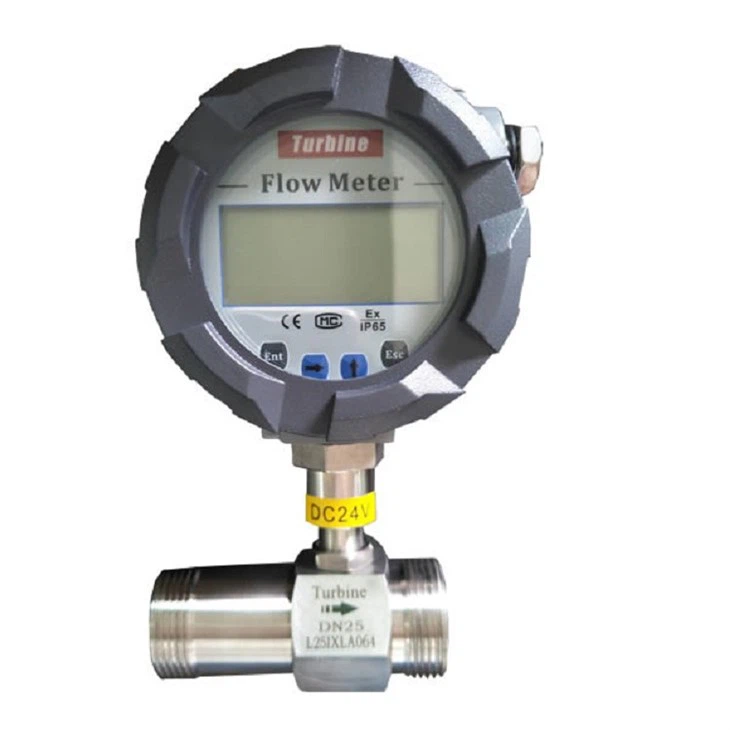
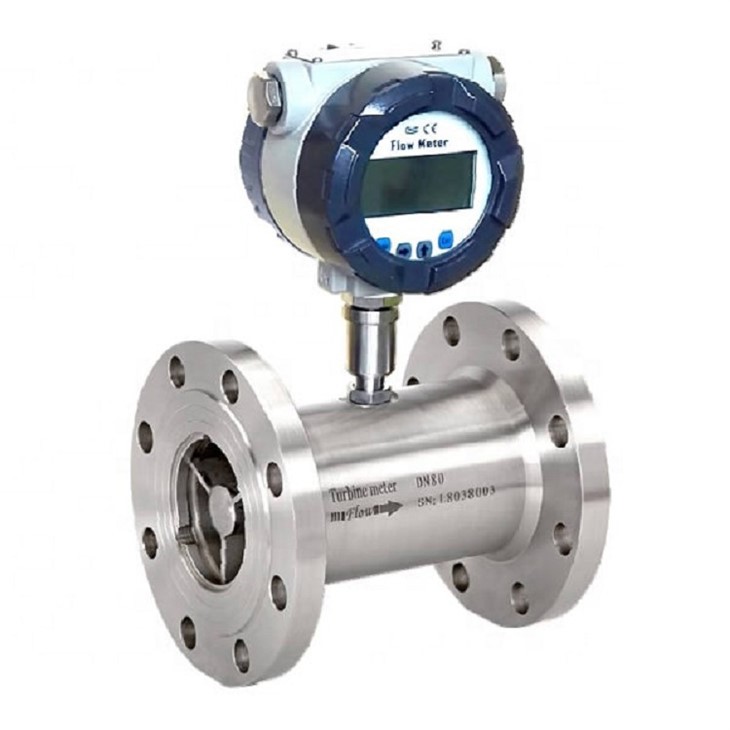
First off, let's talk about what a turbine flowmeter is. Simply put, it's a device that measures the flow rate of a fluid by spinning a turbine inside the flow stream. The speed of the turbine is directly proportional to the flow rate of the fluid. As the fluid flows through the meter, it causes the turbine blades to rotate, and sensors detect this rotation and convert it into an electrical signal that can be used to determine the flow rate.
Now, let's get to the main topic - the frequency response of a turbine flowmeter. The frequency response is a measure of how well the flowmeter can accurately respond to changes in the flow rate. In other words, it tells us how quickly the flowmeter can detect and report changes in the fluid's speed.
The frequency response of a turbine flowmeter is mainly determined by two factors: the mechanical design of the turbine and the electronics used to process the signal from the sensors. Let's take a closer look at each of these.
Mechanical Design
The mechanical design of the turbine plays a crucial role in the frequency response. A well - designed turbine will have low inertia, which means it can start and stop rotating quickly in response to changes in the flow rate. Smaller and lighter turbine blades generally have lower inertia. For example, in some of our high - performance turbine flowmeters, we use precision - engineered turbine blades made from lightweight materials. These blades can respond rapidly to even the smallest changes in the fluid flow.
The shape of the turbine blades also matters. Blades with an aerodynamic or hydrodynamic shape can cut through the fluid more smoothly, reducing drag and allowing for quicker response times. This is especially important in applications where the flow rate can change rapidly, like in some chemical processing plants or in fuel injection systems.
Electronics
The electronics in a turbine flowmeter are responsible for taking the raw signal from the sensors and converting it into a meaningful flow rate measurement. A good set of electronics will have a high sampling rate and a fast signal processing speed. The sampling rate determines how often the electronics measure the turbine's rotation speed. A higher sampling rate means that the flowmeter can capture more frequent changes in the flow rate.
Modern turbine flowmeters often use digital signal processing (DSP) techniques to improve the frequency response. DSP can filter out noise and interference from the signal, making the measurement more accurate. It can also perform complex calculations to correct for any non - linearities in the turbine's response.
Importance of Frequency Response
Why is the frequency response so important? Well, in many industrial applications, the flow rate of a fluid can change very quickly. For example, in a manufacturing process where different chemicals are being mixed in precise proportions, the flow rate of each chemical needs to be accurately controlled. If the flowmeter has a poor frequency response, it may not be able to detect these rapid changes in time, leading to inaccurate measurements and potentially affect the quality of the final product.
In the oil and gas industry, fast - changing flow rates can occur during well testing or in pipeline operations. A turbine flowmeter with a good frequency response is essential for ensuring accurate measurement of the oil or gas flow, which is crucial for billing, production optimization, and safety reasons.
Applications and Suitability
When it comes to specific applications, our turbine flowmeters with good frequency responses can be used in a wide variety of fields. For instance, in the food and beverage industry, our Sanitary Turbine Flowmeter is designed to meet the high - hygiene standards. It can accurately measure the flow of liquids like milk, water, and juices. The good frequency response ensures that even small changes in the flow rate during the filling or processing stages can be detected, helping to maintain consistent product quality.
If you're in the dairy industry, our Milk Turbine Flowmeter is a great choice. With its excellent frequency response, it can handle the variable flow rates that occur during milk processing, such as when milk is being pumped between different storage tanks or through pasteurization equipment.
In industrial applications where the fluid's temperature and pressure can vary, our Temperature And Pressure Compensate Turbine Flowmeter comes in handy. The improved electronics in this model ensure that it can respond quickly to changes in flow rate while also compensating for the effects of temperature and pressure on the measurement.
Comparing with Other Flowmeters
How does the frequency response of a turbine flowmeter stack up against other types of flowmeters? Well, compared to some older, mechanical flowmeters, turbine flowmeters generally have a much better frequency response. For example, positive displacement flowmeters are great for measuring low - velocity, steady - state flows, but they can be slow to respond to changes in the flow rate.
On the other hand, ultrasonic flowmeters can also have a good frequency response, especially in clean fluid applications. However, turbine flowmeters often offer a more cost - effective solution in many industrial settings. They are relatively simple in design, easy to install and maintain, and can provide accurate measurements over a wide range of flow rates.
Factors Affecting Frequency Response
There are a few other factors that can affect the frequency response of a turbine flowmeter. The viscosity of the fluid is one such factor. High - viscosity fluids can cause more drag on the turbine blades, slowing down their rotation and reducing the flowmeter's ability to respond quickly to changes in the flow rate. In such cases, we may need to select a turbine flowmeter with a different blade design or a more powerful sensor to ensure an adequate frequency response.
The installation conditions also matter. If the flowmeter is installed in a location with a lot of turbulence or vibration, it can affect the accuracy of the measurement and the frequency response. Proper installation, including the use of straight pipe sections upstream and downstream of the flowmeter, can help minimize these effects.
Conclusion
So, there you have it - a rundown of the frequency response of a turbine flowmeter. It's a critical aspect of these devices, especially in applications where the flow rate can change rapidly. As a supplier, we're committed to providing turbine flowmeters with excellent frequency responses to meet the diverse needs of our customers.
If you're in the market for a high - quality turbine flowmeter, or if you have any questions about frequency response or our products, don't hesitate to get in touch with us. We're here to help you find the perfect solution for your flow measurement needs. Whether it's a Sanitary Turbine Flowmeter, Milk Turbine Flowmeter, or Temperature And Pressure Compensate Turbine Flowmeter, we've got you covered.
References
- Flow Measurement Handbook: Practical Guides for Measurement of Various Fluids, Green, D. W.
- Instrumentation and Control Systems, Cox, A.


