Hey there! As a supplier of Vortex Flowmeters, I often get asked about the energy consumption of these nifty devices. So, I thought I'd take a deep dive into this topic and share everything you need to know.
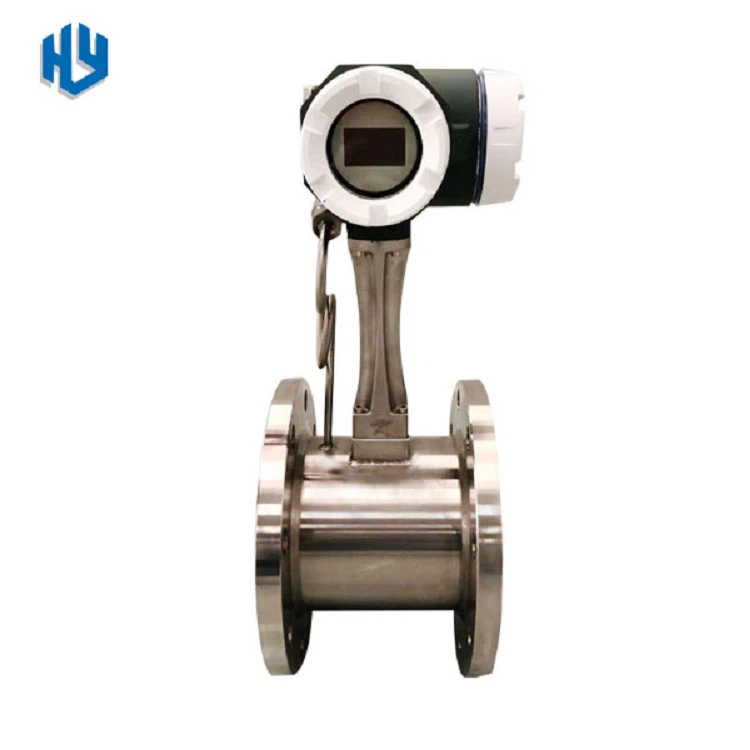
First off, let's understand what a Vortex Flowmeter is. It's a type of flowmeter that measures the flow rate of fluids (liquids, gases, or steam) by detecting the frequency of vortices shed from a bluff body placed in the flow path. These flowmeters are widely used in various industries like oil and gas, chemical, and power generation because they're accurate, reliable, and can handle a wide range of flow rates.
Now, onto the main question: What's the energy consumption of a Vortex Flowmeter? Well, the energy consumption of a Vortex Flowmeter is generally quite low. Unlike some other types of flowmeters that might require a lot of power to operate, Vortex Flowmeters are designed to be energy - efficient.
The main components of a Vortex Flowmeter that consume energy are the sensor and the transmitter. The sensor is responsible for detecting the vortices and converting them into an electrical signal. The transmitter then processes this signal and outputs the flow rate data.
Most modern Vortex Flowmeters use solid - state sensors, which have very low power requirements. These sensors typically operate on a few milliamps of current. For example, a typical Vortex Flowmeter sensor might consume around 3 - 5 mA of current at a supply voltage of 24 VDC. This low current draw means that the power consumption of the sensor is in the range of 72 - 120 mW (using the formula P = VI, where P is power, V is voltage, and I is current).
The transmitter, on the other hand, has a bit higher power consumption. It needs to process the signal from the sensor, perform calculations, and communicate the data to other devices. However, even transmitters are designed to be energy - efficient. A standard Vortex Flowmeter transmitter might consume around 100 - 200 mW of power.
So, in total, a typical Vortex Flowmeter (sensor + transmitter) might consume around 172 - 320 mW of power. This is a relatively small amount of energy, especially when you consider the long - term benefits of accurate flow measurement in industrial processes.
There are several factors that can affect the energy consumption of a Vortex Flowmeter. One of the main factors is the type of output signal. Flowmeters can have different output signals such as 4 - 20 mA, pulse output, or digital communication protocols like Modbus. A 4 - 20 mA output signal is a common choice, and it requires a certain amount of power to maintain the current loop. Digital communication protocols might have slightly different power requirements depending on the frequency of data transmission and the complexity of the protocol.
Another factor is the operating environment. If the flowmeter is installed in a harsh environment with high temperatures or vibrations, it might require more power to maintain accurate operation. For example, in a high - temperature environment, the electronics in the flowmeter might need additional power for temperature compensation to ensure accurate measurements.
Now, let's talk about some of the different types of Vortex Flowmeters we offer. We have the LUGB Vortex Flowmeter. This flowmeter is known for its high accuracy and wide rangeability. It's suitable for measuring the flow of liquids, gases, and steam. The energy consumption of the LUGB Vortex Flowmeter is in line with what I've mentioned earlier, thanks to its advanced sensor and transmitter design.
Our Temperature And Pressure Compensate Vortex Flowmeter is another great option. This flowmeter is designed to provide more accurate flow measurements by compensating for changes in temperature and pressure. Although it has additional functionality, the energy consumption is still relatively low. The extra components for temperature and pressure compensation are designed to be energy - efficient, so you don't have to worry about a significant increase in power consumption.
If you're specifically looking for a flowmeter for steam applications, our Steam Flowmeter is the way to go. Steam flow measurement can be challenging due to the high temperature and pressure of steam. Our Steam Flowmeter is engineered to handle these conditions while maintaining low energy consumption. It uses advanced materials and technologies to ensure reliable operation with minimal power usage.
In conclusion, the energy consumption of a Vortex Flowmeter is relatively low, making it a cost - effective and energy - efficient choice for industrial flow measurement. Whether you need to measure the flow of liquids, gases, or steam, there's a Vortex Flowmeter option available that can meet your requirements without breaking the bank on energy costs.
If you're interested in learning more about our Vortex Flowmeters or are looking to make a purchase, we'd love to hear from you. Contact us to start a conversation about your specific needs, and our team of experts will be happy to assist you in finding the perfect flowmeter for your application.

References
- Flow Measurement Handbook: Principles and Applications by Richard W. Miller
- Industrial Flow Measurement: A Practical Guide by Paul E. O'Rourke