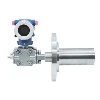
When it comes to measuring gas flow, a Roots flowmeter is a popular choice for many industries. As a supplier of Roots Flowmeter for Gas, I've seen firsthand how various factors can influence the selection of this type of flowmeter. In this blog post, I'll share some key considerations to help you make an informed decision.
Gas Properties
The properties of the gas being measured are among the most important factors to consider. Different gases have different densities, viscosities, and chemical compositions, which can all affect the performance of a Roots flowmeter.
- Density: The density of the gas is a crucial factor as it determines the mass flow rate. Roots flowmeters are typically calibrated for a specific gas density, so it's important to choose a flowmeter that is suitable for the density of the gas you'll be measuring. If the gas density varies significantly from the calibrated value, it can lead to inaccurate measurements.
- Viscosity: Viscosity refers to the resistance of a fluid to flow. Gases with high viscosity can cause more friction within the flowmeter, which may affect its accuracy and performance. It's important to select a Roots flowmeter that can handle the viscosity of the gas without significant pressure drop or measurement errors.
- Chemical Composition: Some gases may be corrosive or reactive, which can damage the internal components of the flowmeter. If you're measuring a gas with a corrosive or reactive nature, you'll need to choose a flowmeter with materials that are resistant to these chemicals. For example, stainless steel or coated components can provide better protection against corrosion.
Flow Rate Range
Another important factor to consider is the flow rate range of the gas. Roots flowmeters are designed to operate within a specific flow rate range, and choosing the right range is essential for accurate measurements.
- Minimum and Maximum Flow Rates: The minimum and maximum flow rates of the gas should be within the operating range of the flowmeter. If the flow rate is too low, the flowmeter may not be able to detect the gas flow accurately. On the other hand, if the flow rate is too high, it can cause excessive wear and tear on the flowmeter components, leading to premature failure.
- Turn-Down Ratio: The turn-down ratio is the ratio of the maximum to the minimum flow rate that the flowmeter can measure accurately. A higher turn-down ratio means that the flowmeter can handle a wider range of flow rates. When selecting a Roots flowmeter, it's important to choose one with a turn-down ratio that meets your specific requirements.
Pressure and Temperature
The pressure and temperature of the gas can also have a significant impact on the performance of a Roots flowmeter.
- Pressure: The pressure of the gas affects the density and flow characteristics. Roots flowmeters are typically designed to operate within a specific pressure range, and it's important to choose a flowmeter that can handle the pressure of the gas without any issues. High-pressure applications may require a flowmeter with a stronger construction and a higher pressure rating.
- Temperature: Temperature can also affect the density and viscosity of the gas. In addition, extreme temperatures can cause thermal expansion or contraction of the flowmeter components, which can lead to measurement errors. It's important to select a Roots flowmeter that is suitable for the temperature range of the gas. Some flowmeters may require additional insulation or cooling to operate effectively at high temperatures.
Accuracy Requirements
The accuracy requirements of your application will also play a role in the selection of a Roots flowmeter.


- Measurement Accuracy: Different applications have different accuracy requirements. For some applications, a high level of accuracy is essential, while for others, a lower level of accuracy may be acceptable. When choosing a Roots flowmeter, it's important to consider the required measurement accuracy and select a flowmeter that can meet those requirements.
- Repeatability: Repeatability refers to the ability of the flowmeter to provide consistent measurements over time. A flowmeter with good repeatability will give the same measurement results under the same operating conditions. This is especially important for applications where the flow rate needs to be monitored continuously.
Installation and Maintenance
The ease of installation and maintenance is another important factor to consider.
- Installation Requirements: Roots flowmeters may require specific installation conditions, such as a certain length of straight pipe upstream and downstream of the flowmeter. It's important to ensure that your installation site can meet these requirements. In addition, some flowmeters may require special tools or expertise for installation.
- Maintenance: Regular maintenance is essential to ensure the accurate and reliable operation of a Roots flowmeter. Some flowmeters may require more frequent maintenance than others, depending on their design and the operating conditions. When selecting a flowmeter, it's important to consider the maintenance requirements and choose a flowmeter that is easy to maintain.
Cost
Cost is always a consideration when making any purchasing decision.
- Initial Cost: The initial cost of a Roots flowmeter can vary depending on its size, features, and accuracy. It's important to compare the prices of different flowmeters and choose one that offers the best value for your money. However, it's also important to remember that the cheapest option may not always be the best choice in the long run.
- Operating Cost: In addition to the initial cost, you also need to consider the operating cost of the flowmeter. This includes the cost of energy consumption, maintenance, and replacement parts. A flowmeter with a low operating cost can save you money in the long term.
Compatibility with Existing Systems
If you already have an existing measurement system in place, it's important to choose a Roots flowmeter that is compatible with it.
- Communication Protocols: Many modern flowmeters are equipped with communication protocols that allow them to interface with other devices, such as controllers or data loggers. When selecting a flowmeter, it's important to ensure that it supports the communication protocols used by your existing system.
- Mounting and Connection: The flowmeter should be easy to mount and connect to your existing piping system. Make sure that the connections are compatible with the size and type of pipes you have.
In conclusion, selecting the right Roots Flowmeter for Gas requires careful consideration of several factors, including gas properties, flow rate range, pressure and temperature, accuracy requirements, installation and maintenance, cost, and compatibility with existing systems. As a supplier of Gas Roots Flowmeter, I'm here to help you navigate these considerations and find the best flowmeter for your specific needs. If you're interested in learning more about our Gas Flowmeter products or have any questions, don't hesitate to reach out. Let's have a discussion to see how we can meet your flow measurement requirements.
References
- "Flow Measurement Handbook: Industrial Designs and Applications" by Ralph W. Miller
- "Instrumentation and Control Systems" by C. Terry Canale