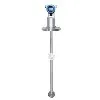
What are the installation requirements for insertion high accuracy flowmeters?
As a trusted supplier of High Accuracy Flowmeter, I understand the critical role that proper installation plays in ensuring the optimal performance of these advanced instruments. Insertion high accuracy flowmeters are widely used across various industries to measure the flow rate of liquids and gases with unparalleled precision. In this blog, I will delve into the key installation requirements necessary to harness the full potential of these devices.
1. Site Selection
The first step in installing an insertion high accuracy flowmeter is to carefully select the installation site. This decision significantly impacts the accuracy and reliability of the flow measurements.
- Straight Pipe Requirements: It is recommended to install the flowmeter in a section of the pipeline with at least 10 - 15 times the pipe diameter of straight run upstream and 5 - 10 times the pipe diameter of straight run downstream. This straight pipe section helps to ensure a fully developed and stable flow profile, minimizing the effects of turbulence caused by elbows, valves, or other flow disturbances. For example, in a 10 - inch diameter pipeline, the upstream straight run should be at least 100 - 150 inches, and the downstream straight run should be 50 - 100 inches.
- Accessibility and Maintenance: The installation site should also be easily accessible for maintenance and calibration. This includes providing sufficient clearance around the flowmeter to allow for the removal and installation of the sensor without interfering with other components in the pipeline system. Additionally, the sensor should be installed at a location where it can be easily reached for cleaning and inspection purposes.
2. Pipe Condition
The condition of the pipeline where the insertion high accuracy flowmeter is installed is also crucial for accurate measurement.
- Pipe Material and Wall Condition: The pipe material should be compatible with the fluid being measured. For example, when measuring corrosive fluids, the pipeline should be made of corrosion - resistant materials such as stainless steel or plastic. The inner wall of the pipe should be smooth and free from debris, scale, or deposits that could disrupt the flow or cause inaccurate readings. Before installation, it may be necessary to clean the pipeline thoroughly to ensure its integrity.
- Pipe Size and Shape: The flowmeter should be compatible with the pipe size. Incorrect sizing can lead to over - or under - estimation of the flow rate. Additionally, the pipe should have a consistent cross - sectional shape. Deviations from a circular or standard shape can cause flow disturbances and affect the accuracy of the measurement.
3. Sensor Installation
The proper installation of the flowmeter sensor is vital for achieving high - precision flow measurement.


- Insertion Depth: The sensor should be inserted at the correct depth into the pipeline. In most cases, the sensor should be positioned at the center of the flow stream to measure the average flow velocity accurately. However, this may vary depending on the specific design of the flowmeter and the nature of the fluid flow. Some flowmeters are designed to be inserted at a specific fraction of the pipe diameter from the inner wall.
- Orientation: The orientation of the sensor in the pipeline is also important. It should be installed in the correct direction according to the flow direction indicated on the flowmeter. Incorrect orientation can lead to inaccurate readings or even damage to the sensor.
4. Electrical and Mounting Considerations
In addition to the mechanical installation, electrical and mounting aspects are equally important.
- Electrical Connections: All electrical connections, including power supply and signal output cables, should be made correctly. The wiring should be properly insulated to prevent electrical interference and ensure reliable signal transmission. It is recommended to follow the manufacturer's wiring diagram and specifications to avoid any potential issues.
- Mechanical Mounting: The flowmeter should be securely mounted to the pipeline to prevent vibration and movement. Vibration can cause noise in the measurement signal and affect the accuracy of the flowmeter. The use of mounting brackets, clamps, or other appropriate fixtures can help ensure a stable installation.
5. Calibration and Commissioning
After the installation is complete, calibration and commissioning are essential steps to ensure the accurate operation of the insertion high accuracy flowmeter.
- Calibration: The flowmeter should be calibrated using a certified calibration standard. This process involves comparing the output of the flowmeter with a known reference flow rate to adjust the instrument's settings accurately. Calibration should be performed by trained technicians following the manufacturer's recommended procedures.
- Commissioning: During commissioning, the flowmeter should be tested under normal operating conditions to verify its performance. This includes checking the flow readings, signal stability, and any alarms or diagnostic functions. Any issues identified during commissioning should be addressed promptly to ensure the proper functioning of the flowmeter.
6. Compatibility with the Fluid
The insertion high accuracy flowmeter must be compatible with the fluid being measured.
- Fluid Properties: Consider the physical and chemical properties of the fluid, such as viscosity, density, temperature, and pressure. Different flowmeters are designed to work optimally within specific ranges of these properties. For example, a Mass Flowmeter is suitable for measuring the mass flow rate of fluids regardless of changes in temperature and pressure. A Coriolis Mass Flowmeter for Drinking is specifically designed for measuring the flow of drinking water, with features such as hygienic design and low - maintenance requirements.
- Fluid Purity: The presence of contaminants or particles in the fluid can also affect the performance of the flowmeter. Some flowmeters may require additional filtration or pre - treatment of the fluid to ensure accurate measurement.
In conclusion, the installation of insertion high accuracy flowmeters requires careful consideration of various factors, including site selection, pipe condition, sensor installation, electrical and mounting aspects, calibration, and fluid compatibility. By adhering to these installation requirements, you can ensure that your flowmeter provides accurate and reliable flow measurements for your industrial processes.
If you are interested in purchasing high - accuracy flowmeters or need further advice on installation and operation, we invite you to contact us for procurement discussions. Our team of experts is ready to provide you with customized solutions to meet your specific needs.
References
- Flow Measurement Handbook: Industrial Designs and Applications.
- Instrumentation Engineer's Handbook, vol. 2: Process Measurement and Analysis.