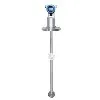
A Roots flowmeter is a positive displacement flowmeter that measures the volume of gas flowing through a pipeline. As a trusted Roots flowmeter supplier, we understand the importance of proper installation to ensure accurate and reliable measurement. This blog will delve into the key installation requirements for a Roots flowmeter in a pipeline, covering aspects such as pipeline conditions, installation orientation, and auxiliary equipment.
Pipeline Conditions
Pipe Size and Compatibility
The pipe size where the Roots flowmeter is to be installed must be carefully considered. The flowmeter should be compatible with the pipeline diameter to ensure smooth gas flow. A mismatch in pipe size can lead to inaccurate measurements and increased pressure drop. For instance, if the flowmeter is too small for the pipeline, it may cause excessive turbulence and pressure build - up, while an oversized flowmeter may not accurately capture the gas flow rate. It is recommended to select a Roots flowmeter with a pipe size that closely matches the existing pipeline or make appropriate pipe adapters if necessary.


Pipeline Cleanliness
The pipeline must be clean before installing the Roots flowmeter. Any debris, rust, or other contaminants in the pipeline can damage the internal components of the flowmeter and affect its performance. Prior to installation, the pipeline should be thoroughly cleaned using appropriate cleaning methods such as flushing with a cleaning agent or using a pigging system. This helps to remove any loose particles and ensures that the gas flowing through the flowmeter is clean.
Pipeline Straightness
Adequate straight - pipe lengths upstream and downstream of the Roots flowmeter are crucial. Upstream straight - pipe lengths are necessary to allow the gas flow to become fully developed and laminar before entering the flowmeter. Typically, a minimum of 10 to 15 times the pipe diameter of straight pipe is required upstream of the flowmeter. Downstream, a straight - pipe length of at least 5 times the pipe diameter is recommended to prevent any back - pressure or flow disturbances from affecting the measurement. This ensures that the flowmeter can accurately measure the gas volume without being influenced by irregular flow patterns.
Installation Orientation
Horizontal Installation
In most cases, Roots flowmeters are installed horizontally in the pipeline. Horizontal installation helps to ensure that the internal rotors of the flowmeter are properly lubricated by the gas flow and that any condensate or liquid in the gas can drain away. When installing the flowmeter horizontally, it is important to ensure that it is level within a certain tolerance. A non - level installation can cause uneven wear on the rotors and affect the accuracy of the measurement.
Vertical Installation
Vertical installation of a Roots flowmeter may be required in some situations, such as when there is limited horizontal space or when the gas contains a significant amount of liquid. When installing the flowmeter vertically, the gas should flow from bottom to top. This helps to prevent liquid accumulation in the flowmeter and ensures that the rotors can rotate freely. However, vertical installation may require additional considerations such as ensuring proper drainage of any condensate that may collect at the bottom of the flowmeter.
Auxiliary Equipment
Filters
Installing a filter upstream of the Roots flowmeter is highly recommended. The filter helps to remove any remaining particles or contaminants in the gas that could damage the flowmeter. A good quality filter can significantly extend the service life of the flowmeter and improve its measurement accuracy. There are different types of filters available, such as mesh filters and cartridge filters, and the choice depends on the specific requirements of the application.
Valves
Properly installed valves are essential for the operation and maintenance of the Roots flowmeter. Isolation valves should be installed upstream and downstream of the flowmeter to allow for easy maintenance and replacement. These valves can be used to shut off the gas flow when necessary. Additionally, a bypass valve may be installed to divert the gas flow around the flowmeter during calibration or maintenance.
Pressure and Temperature Sensors
Pressure and temperature sensors are often installed in the pipeline near the Roots flowmeter. These sensors are used to measure the pressure and temperature of the gas, which are important parameters for accurate volume measurement. Since the volume of a gas is affected by pressure and temperature, the measured volume needs to be corrected based on these parameters. By installing pressure and temperature sensors, the flowmeter can provide more accurate results by compensating for changes in gas conditions.
Calibration and Commissioning
Initial Calibration
After the Roots flowmeter is installed, it must be calibrated to ensure accurate measurement. Calibration involves comparing the output of the flowmeter with a known standard. This can be done using a calibration rig or by sending the flowmeter to a certified calibration laboratory. The calibration process helps to determine the accuracy of the flowmeter and to adjust it if necessary.
Commissioning
Once the flowmeter is calibrated, it is ready for commissioning. During commissioning, the flowmeter is put into operation, and the system is checked for proper functioning. This includes checking for any leaks in the pipeline, ensuring that the auxiliary equipment is working correctly, and verifying that the flowmeter is providing accurate measurements. Any issues identified during commissioning should be addressed promptly to ensure the reliable operation of the flowmeter.
Importance of Professional Installation
Proper installation of a Roots flowmeter is a complex process that requires technical expertise. As a Roots flowmeter supplier, we highly recommend that the installation be carried out by trained professionals. Professional installers have the knowledge and experience to ensure that all the installation requirements are met, which can help to avoid costly mistakes and ensure the long - term performance of the flowmeter.
Contact Us for Purchase and Consultation
If you are in the market for a high - quality Gas Flowmeter, Gas Roots Flowmeter, or Roots Flowmeter for Gas, our team of experts is here to assist you. We offer a wide range of Roots flowmeters that are designed to meet various industrial applications. Whether you need help with installation, calibration, or simply have questions about our products, we are ready to provide you with the best solutions. Contact us today to start the procurement process and ensure accurate gas flow measurement in your pipeline.
References
- ISO 9951:2019, “Measurement of gas flow by means of Roots meters”.
- ASME MFC - 6M - 2018, “Measurement of Gas Flow in Closed Conduits Using Positive Displacement Meters”.
- Manufacturers' installation and operation manuals for Roots flowmeters.