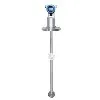
Hey there! As a supplier of Roots Flowmeters, I've seen firsthand how crucial proper installation is for these nifty devices. In this blog, I'll share some essential installation precautions for a Roots Flowmeter to ensure you get the most out of it.
1. Location, Location, Location
First things first, choosing the right location for your Roots Flowmeter is super important. You want to pick a spot that's free from excessive vibrations and mechanical shocks. Vibrations can mess with the internal components of the flowmeter, leading to inaccurate readings. For example, if you install it near a large industrial machine that vibrates a lot, the constant shaking can cause the meter's gears to wear out faster or misalign, throwing off the measurement.
Also, avoid areas with high electromagnetic interference (EMI). EMI can disrupt the electrical signals within the flowmeter, affecting its performance. So, stay away from big motors, transformers, or other electrical equipment that can generate strong electromagnetic fields.
Another key factor is accessibility. You'll need to be able to reach the flowmeter for maintenance and calibration. Make sure there's enough space around it so you can easily open the housing, check the components, and make any necessary adjustments.
2. Pipework Considerations
The pipework where you install the Roots Flowmeter plays a huge role in its proper functioning. The pipe should be straight and have a uniform diameter for a certain distance upstream and downstream of the flowmeter. This helps to ensure a stable and laminar flow of the gas or fluid passing through.
For most Roots Flowmeters, you'll need at least 10 to 15 times the pipe diameter of straight pipe upstream and 5 to 10 times the pipe diameter downstream. This gives the flow enough time to settle and become evenly distributed before it reaches the meter and after it leaves. If the pipe has bends, elbows, or valves too close to the flowmeter, it can create turbulence, which will lead to inaccurate measurements.
When connecting the flowmeter to the pipe, make sure the flanges are properly aligned. Misaligned flanges can cause stress on the flowmeter body, which may lead to leaks or damage over time. Use the correct gaskets and tighten the bolts evenly to ensure a good seal.
3. Gas or Fluid Compatibility
Before installing a Roots Flowmeter, you need to make sure it's compatible with the gas or fluid you're going to measure. Different flowmeters are designed for specific types of gases or fluids, and using an incompatible one can lead to serious problems.


For example, if you're measuring a corrosive gas, you'll need a flowmeter with corrosion-resistant materials. Otherwise, the gas can eat away at the internal components, reducing the meter's lifespan and accuracy. Check the manufacturer's specifications to ensure the flowmeter can handle the temperature, pressure, and chemical properties of your gas or fluid.
Also, be aware of any impurities or contaminants in the gas or fluid. Particles or debris can get stuck in the flowmeter's gears or other moving parts, causing them to jam or wear out prematurely. If necessary, install filters upstream of the flowmeter to remove any unwanted particles.
4. Mounting Orientation
The mounting orientation of the Roots Flowmeter matters a great deal. Most flowmeters are designed to be installed in a horizontal position, with the axis of the meter parallel to the ground. This helps to ensure that the gears or other measuring elements are properly lubricated and function smoothly.
If you need to install the flowmeter in a vertical position, make sure to follow the manufacturer's guidelines carefully. Some flowmeters may require special adjustments or additional support when installed vertically to prevent issues like uneven wear or inaccurate readings.
5. Electrical Connections
If your Roots Flowmeter has electrical components, such as a transmitter or a display, you need to pay close attention to the electrical connections. Make sure all the wires are properly insulated and connected to the correct terminals. Loose or faulty connections can cause electrical problems, such as short circuits or signal interference.
Use the appropriate cable type and size for the electrical installation. Follow the local electrical codes and regulations to ensure a safe and reliable electrical connection. Also, protect the electrical components from moisture and dust to prevent damage.
6. Pressure and Temperature
The pressure and temperature of the gas or fluid being measured can have a significant impact on the performance of the Roots Flowmeter. Make sure the flowmeter is rated for the maximum pressure and temperature conditions it will encounter.
High pressure can put extra stress on the flowmeter's components, while high temperature can affect the material properties and the accuracy of the measurement. If the pressure or temperature exceeds the rated limits, it can cause damage to the flowmeter or lead to inaccurate readings.
Install pressure and temperature sensors near the flowmeter to monitor these parameters continuously. This will help you detect any abnormal conditions and take appropriate action before they cause problems.
7. Initial Calibration
Once the Roots Flowmeter is installed, it's essential to perform an initial calibration. Calibration ensures that the flowmeter is accurately measuring the flow rate of the gas or fluid. Follow the manufacturer's calibration procedures carefully, using a known reference standard.
Calibration may involve adjusting the meter's settings or parameters to match the actual flow rate. This process may need to be repeated periodically to maintain the accuracy of the flowmeter over time.
8. Testing and Commissioning
After installation and calibration, it's time to test and commission the Roots Flowmeter. Start by slowly introducing the gas or fluid into the system and check for any leaks or abnormal noises. Monitor the flowmeter's readings and compare them with the expected values.
If you notice any issues, such as inaccurate readings, leaks, or abnormal vibrations, stop the system immediately and troubleshoot the problem. Make sure all the components are functioning properly before putting the flowmeter into full operation.
As a supplier of Roots Flowmeter for Gas, Gas Roots Flowmeter, and Gas Flowmeter, we're here to help you with any installation questions or concerns you may have. If you're in the market for a high-quality Roots Flowmeter and want to discuss your specific requirements, don't hesitate to reach out to us for a procurement discussion. We'll work with you to find the best solution for your needs.
References
- Manufacturer's installation and operation manuals for Roots Flowmeters.
- Industry standards and guidelines for flowmeter installation.