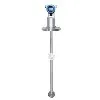
Hey there! As a supplier of concentration meters, I've seen my fair share of issues that customers run into. In this blog post, I'm gonna break down some of the common problems with concentration meters and how you can deal with them.
Calibration Woes
One of the most frequent headaches with concentration meters is calibration problems. Calibration is like setting the compass for your meter; it ensures that the readings you're getting are accurate. If your meter isn't calibrated correctly, you might as well be guessing the concentration levels.
Over time, the internal components of a concentration meter can wear out or get affected by environmental factors. This can throw off the calibration. For example, temperature changes can cause the materials inside the meter to expand or contract, which messes with the sensor's accuracy.
Another thing that can mess up calibration is using the wrong calibration standards. You need to make sure you're using the right ones for your specific application. If you're measuring the concentration of a particular chemical, you need to use a calibration standard that's formulated for that chemical.
To fix calibration issues, you should regularly calibrate your concentration meter according to the manufacturer's instructions. Most meters come with a calibration procedure that's pretty straightforward. You'll usually need to use a calibration solution and follow a series of steps to adjust the meter. And don't forget to keep records of your calibrations; it'll help you track the performance of your meter over time.
Sensor Fouling
Sensor fouling is another common problem. The sensor in a concentration meter is like the eyes and ears of the device; it's what detects the concentration of the substance you're measuring. But if the sensor gets dirty or covered in debris, it won't be able to do its job properly.
In industrial settings, there are all sorts of contaminants floating around. Things like dirt, oil, and chemical residues can build up on the sensor surface. This creates a barrier between the sensor and the substance you're measuring, which can lead to inaccurate readings.
For instance, in a food processing plant, if you're using a Sanitary Type Concentration Transmitter to measure the concentration of a liquid ingredient, food particles can stick to the sensor. This can cause the meter to give false readings, which can mess up the entire production process.
To prevent sensor fouling, you need to keep the sensor clean. Depending on the type of meter and the environment it's in, you might need to clean the sensor regularly. Some meters have self-cleaning mechanisms, which can be a real lifesaver. But even if your meter has a self-cleaning feature, you still need to do some manual cleaning from time to time.
Electrical Interference
Electrical interference is a sneaky problem that can cause all sorts of issues with concentration meters. In today's industrial world, there are all kinds of electrical devices and machinery running around. These can generate electromagnetic fields that can interfere with the electrical signals in your concentration meter.
For example, if your meter is installed near a large motor or a power generator, the electromagnetic fields from these devices can disrupt the signals from the sensor. This can result in erratic readings or even cause the meter to malfunction.
To deal with electrical interference, you need to make sure your meter is properly shielded. Most modern concentration meters come with some level of electromagnetic shielding, but you might need to take additional precautions. You can use shielded cables to connect the meter to other devices, and you can also install the meter in a location that's away from sources of electrical interference.
Compatibility Issues
Compatibility issues can also be a pain in the neck. When you're choosing a concentration meter, you need to make sure it's compatible with the substance you're measuring and the environment it'll be used in.
For example, if you're measuring the concentration of a highly corrosive chemical, you need to choose a meter that's made from materials that can withstand corrosion. If you use a meter that's not compatible with the chemical, the meter can get damaged, and you'll end up with inaccurate readings.
Also, you need to make sure the meter is compatible with the other equipment in your system. For instance, if you're using a Tri-clamp Sanitary Concentration Transmitter in a food processing plant, you need to make sure it can be easily integrated with your existing pipes and valves.
Maintenance Neglect
Last but not least, maintenance neglect is a big problem. A concentration meter is like a car; it needs regular maintenance to keep running smoothly. If you don't take care of your meter, it's gonna break down sooner or later.
Some people think that once they install a concentration meter, they can just forget about it. But that's not the case. You need to regularly check the meter for any signs of wear and tear, and you need to replace any worn-out parts.
For example, the batteries in a portable concentration meter need to be replaced regularly. If you let the batteries run out, the meter might not work properly. And if you're using a Fork Type Concentration Transmitter, you need to make sure the forks are clean and in good condition.


So, there you have it! These are some of the common problems with concentration meters and how you can deal with them. If you're having any issues with your concentration meter, don't hesitate to reach out. We're here to help you get the most accurate readings and keep your operations running smoothly. Whether you're looking to buy a new concentration meter or need some advice on maintenance, we're just a message away. Let's start a conversation and find the best solution for your needs.
References
- Manufacturer's manuals of concentration meters
- Industry best practices for concentration meter usage and maintenance
- Technical articles on concentration meter technology and troubleshooting