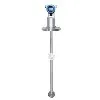
Hey there! As a supplier of Ultrasonic Level Meters, I'm super excited to share with you how these nifty devices work. You might be wondering, what's all the fuss about Ultrasonic Level Meters? Well, they're used in a ton of industries to measure the level of liquids or solids in tanks, silos, and other containers. So, let's dive right in and explore the ins and outs of how they operate.
The Basics of Ultrasonic Waves
First things first, we need to understand ultrasonic waves. Ultrasonic waves are sound waves with frequencies higher than the upper audible limit of human hearing, which is typically around 20,000 Hz. These waves travel through the air, liquids, or solids just like regular sound waves, but because of their high frequency, they have some unique properties that make them perfect for level measurement.
Ultrasonic waves are generated by a transducer, which is a key component of an Ultrasonic Level Meter. The transducer converts electrical energy into ultrasonic waves and vice versa. When an electrical pulse is sent to the transducer, it vibrates at a high frequency and emits ultrasonic waves into the surrounding medium.
How an Ultrasonic Level Meter Measures Level
Now that we know about ultrasonic waves, let's see how an Ultrasonic Level Meter uses them to measure the level of a substance in a container. The process is actually quite straightforward.
The Ultrasonic Level Meter has a transducer that is usually mounted at the top of the container. When the meter is turned on, it sends out a short burst of ultrasonic waves towards the surface of the liquid or solid inside the container. These waves travel through the air or gas in the container and bounce off the surface of the substance.
After bouncing off the surface, the ultrasonic waves travel back to the transducer. The transducer then converts the returning ultrasonic waves back into electrical signals. The meter measures the time it takes for the waves to travel to the surface and back.
Since the speed of ultrasonic waves in a given medium (like air) is known, the meter can calculate the distance between the transducer and the surface of the substance using the formula:
[d = \frac{v\times t}{2}]
where (d) is the distance, (v) is the speed of the ultrasonic waves in the medium, and (t) is the time taken for the waves to travel to the surface and back. The division by 2 is because the time (t) includes the round - trip time of the waves.
Once the distance (d) is calculated, the meter can determine the level of the substance in the container. If the height of the container is (H), then the level (L) of the substance is given by (L=H - d).
Factors Affecting Ultrasonic Level Meter Performance
While Ultrasonic Level Meters are pretty reliable, there are a few factors that can affect their performance.
Temperature
The speed of ultrasonic waves in air changes with temperature. As the temperature increases, the speed of sound also increases. Most modern Ultrasonic Level Meters have temperature compensation built - in. They measure the ambient temperature and adjust the speed of sound used in the distance calculation accordingly. This helps to ensure accurate level measurements even when the temperature varies.
Vapor and Foam
Vapor and foam can absorb or scatter ultrasonic waves, which can lead to inaccurate measurements. Vapor can reduce the strength of the returning signal, and foam can cause multiple reflections that make it difficult for the meter to determine the true surface of the substance. Some Ultrasonic Level Meters are designed to handle these conditions better than others. For example, they might have algorithms that can filter out the effects of foam or vapor.
Container Shape and Obstructions
The shape of the container and the presence of obstructions inside the container can also affect the performance of an Ultrasonic Level Meter. Irregularly shaped containers can cause the ultrasonic waves to reflect in unpredictable ways. Obstructions such as pipes or agitators inside the container can block the path of the ultrasonic waves or cause unwanted reflections. In such cases, it's important to choose the right type of Ultrasonic Level Meter and to install it in a way that minimizes these issues.
Applications of Ultrasonic Level Meters
Ultrasonic Level Meters are used in a wide range of industries. Here are some common applications:
Water and Wastewater Treatment
In water and wastewater treatment plants, Ultrasonic Level Meters are used to measure the level of water in tanks, basins, and clarifiers. This helps in controlling the flow of water through the treatment process and in ensuring that the tanks don't overflow.
Chemical Industry
In the chemical industry, these meters are used to measure the level of various chemicals in storage tanks. They can handle corrosive and hazardous chemicals, as long as the transducer is made of a suitable material.
Food and Beverage Industry
In the food and beverage industry, Ultrasonic Level Meters are used to measure the level of liquids such as milk, juice, and beer in storage tanks. They are hygienic and can be easily cleaned, which is important in this industry.
Why Choose Our Ultrasonic Level Meters
As a supplier of Ultrasonic Level Meters, we take pride in offering high - quality products. Our Ultrasonic Level Meters are designed with the latest technology to ensure accurate and reliable measurements.


We offer meters with different features to suit various applications. For example, some of our meters have advanced signal processing algorithms to handle difficult conditions such as foam and vapor. We also provide excellent customer support, from installation guidance to after - sales service.
If you're in the market for an Ultrasonic Level Meter, whether it's for a small - scale application or a large industrial project, we've got you covered. Our team of experts can help you choose the right meter for your specific needs.
Let's Connect for Your Ultrasonic Level Meter Needs
If you're interested in learning more about our Ultrasonic Level Meters or if you're ready to make a purchase, we'd love to hear from you. Whether you have questions about the technology, need help with installation, or want to discuss pricing, don't hesitate to reach out. We're here to assist you every step of the way. Contact us today to start the conversation and find the perfect Ultrasonic Level Meter solution for your business.
References
- "Ultrasonic Sensors: Theory, Design, and Application" by David A. Hutchins.
- "Industrial Measurement and Control" by John G. Webster.