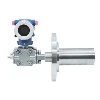
In the realm of industrial measurement and control, gas flow measurement is a critical task, and the Gas Roots Flowmeter stands out as a reliable solution. As a supplier of Gas Roots Flowmeters, I often encounter questions regarding how these devices handle gas leaks during operation. In this blog post, I will delve into the mechanisms and features of Gas Roots Flowmeters that enable them to address gas leaks effectively.
Understanding the Gas Roots Flowmeter
Before discussing how Gas Roots Flowmeters handle gas leaks, it is essential to understand their basic working principle. A Gas Roots Flowmeter operates based on the principle of positive displacement. It consists of two or more rotors that intermesh and rotate within a measuring chamber. As gas enters the chamber, it is trapped between the rotors and the chamber walls, and then pushed out of the chamber. The rotation of the rotors is directly proportional to the volume of gas passing through the meter, allowing for accurate measurement of gas flow.
Design Features to Prevent Gas Leaks
One of the primary ways Gas Roots Flowmeters handle gas leaks is through their robust design. These flowmeters are typically constructed with high - quality materials such as cast iron, stainless steel, or aluminum alloy, which provide excellent mechanical strength and corrosion resistance. The measuring chamber is precisely machined to ensure a tight fit between the rotors and the chamber walls. This close tolerance minimizes the clearance between the moving parts, reducing the likelihood of gas leakage.
In addition, Gas Roots Flowmeters are equipped with reliable seals and gaskets. The seals are designed to prevent gas from escaping around the shafts of the rotors and other moving components. High - performance elastomeric materials are often used for these seals, which can withstand high pressures and temperatures while maintaining their sealing properties. Gaskets are used at the flanges and joints of the flowmeter to create a tight seal between different parts of the device.
Monitoring and Detection of Gas Leaks
Even with a well - designed flowmeter, it is still possible for gas leaks to occur over time due to wear and tear, improper installation, or external factors. To address this issue, Gas Roots Flowmeters can be integrated with monitoring and detection systems.
One common method is the use of pressure sensors. By monitoring the pressure difference across the flowmeter, any abnormal changes in pressure can indicate a potential gas leak. If the pressure drop across the flowmeter is higher than normal, it may suggest that gas is leaking out of the measuring chamber. This information can be transmitted to a control system, which can then trigger an alarm or take corrective actions.
Another approach is the use of gas detectors. These detectors can be installed near the flowmeter to detect the presence of gas in the surrounding environment. If a gas leak occurs, the detectors will sense the gas and send a signal to the control system. This provides an additional layer of safety and allows for early detection of gas leaks.
Maintenance and Repair to Minimize Gas Leaks
Regular maintenance is crucial for ensuring the proper operation of Gas Roots Flowmeters and minimizing gas leaks. As a supplier, we recommend that our customers follow a comprehensive maintenance schedule.
This includes periodic inspection of the flowmeter's components, such as the rotors, seals, and gaskets. Any signs of wear or damage should be addressed immediately. For example, if the seals are worn out, they should be replaced promptly to prevent gas leakage.
In addition, proper cleaning of the flowmeter is essential. Over time, dirt, dust, and other contaminants can accumulate inside the measuring chamber, which can affect the performance of the flowmeter and potentially lead to gas leaks. Cleaning the flowmeter at regular intervals can help to remove these contaminants and ensure the smooth operation of the rotors.
If a gas leak is detected, prompt repair is necessary. Our technical support team is available to assist customers in diagnosing the problem and providing solutions. We can supply replacement parts and offer on - site repair services if needed.
Impact of Gas Leaks on Flowmeter Performance
Gas leaks can have a significant impact on the performance of Gas Roots Flowmeters. When gas leaks occur, the volume of gas measured by the flowmeter may not accurately reflect the actual volume of gas flowing through the pipeline. This can lead to measurement errors, which can have serious consequences in industrial applications.
For example, in the natural gas industry, inaccurate flow measurement can result in financial losses for both the gas supplier and the consumer. If the flowmeter overestimates the gas volume, the consumer may be overcharged; if it underestimates the volume, the supplier may lose revenue. In addition, gas leaks can also pose safety risks, as some gases are flammable or toxic.


Comparison with Other Gas Flowmeters
Compared to other types of gas flowmeters, such as turbine flowmeters and ultrasonic flowmeters, Gas Roots Flowmeters have certain advantages in handling gas leaks.
Turbine flowmeters rely on the rotation of a turbine wheel to measure gas flow. These flowmeters are more susceptible to gas leaks due to the relatively large clearances between the turbine blades and the housing. Ultrasonic flowmeters, on the other hand, measure gas flow based on the propagation time of ultrasonic waves. While they have no moving parts, they can be affected by gas leaks if the gas composition or density changes due to leakage.
Gas Roots Flowmeters, with their positive - displacement principle and tight - fitting design, are generally more resistant to gas leaks, providing more accurate and reliable measurement results.
Applications and the Importance of Gas Leak Prevention
Gas Roots Flowmeters are widely used in various industries, including natural gas distribution, chemical processing, and power generation. In these applications, preventing gas leaks is of utmost importance.
In the natural gas distribution industry, Gas Roots Flowmeters are used to measure the flow of gas from the production well to the end - user. Any gas leaks in this process can not only lead to economic losses but also pose a significant safety hazard. In chemical processing plants, accurate gas flow measurement is essential for maintaining the quality and efficiency of the production process. Gas leaks can disrupt the chemical reactions and contaminate the products.
In power generation, Gas Roots Flowmeters are used to measure the flow of fuel gas. A gas leak can result in a loss of energy and increase the risk of fire or explosion.
Conclusion
As a supplier of Gas Roots Flowmeters, we understand the importance of handling gas leaks during operation. Through a combination of robust design, monitoring and detection systems, regular maintenance, and prompt repair, Gas Roots Flowmeters can effectively address gas leak issues.
If you are in the market for a reliable gas flow measurement solution, our Roots Flowmeter for Gas and Gas Flowmeter products are designed to meet your needs. We offer high - quality flowmeters with excellent gas leak prevention capabilities. Whether you are in the natural gas, chemical, or power generation industry, our flowmeters can provide accurate and reliable gas flow measurement.
If you have any questions or would like to discuss your specific requirements, please feel free to contact us. We look forward to working with you to find the best gas flow measurement solution for your application.
References
- ISO 9951:2019, Gas meters - Roots type gas meters.
- Flow Measurement Handbook: Industrial Designs and Applications by Richard W. Miller.
- Perry's Chemical Engineers' Handbook, 8th Edition, McGraw - Hill.