

In the world of industrial process control, understanding how a DP (Differential Pressure) transmitter works in a multi - phase flow system is crucial. As a supplier of DP transmitters, I've seen firsthand the importance of these devices in various industries. So, let's dive right in and explore how these nifty gadgets operate in multi - phase flow scenarios.
Basics of a DP Transmitter
First off, let's get a handle on what a DP transmitter is. A DP transmitter measures the difference in pressure between two points. It's like a detective that figures out the pressure gap between, say, the inlet and the outlet of a pipe. This pressure difference can tell us a whole lot about what's going on inside the system.
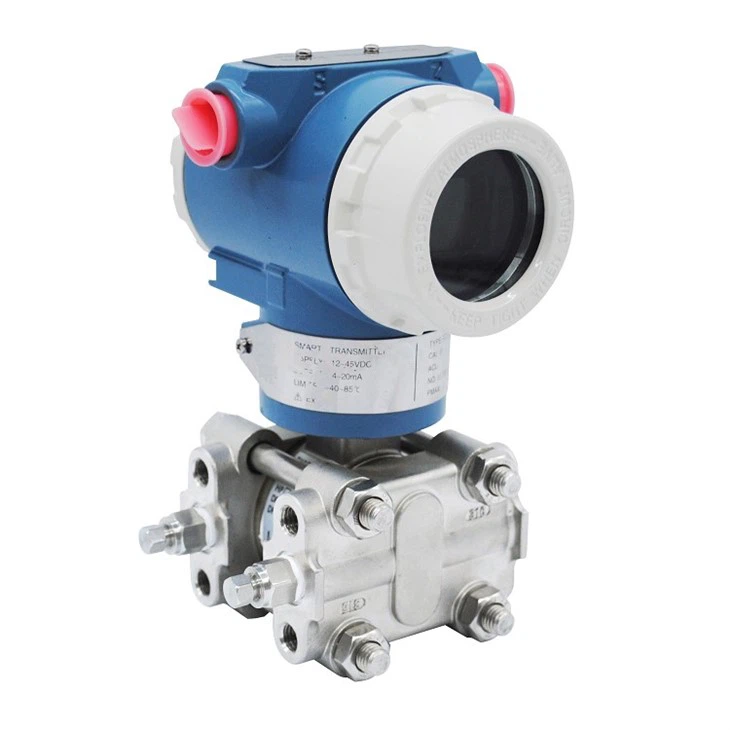
The basic components of a DP transmitter include a sensing element, a signal processor, and an output stage. The sensing element is the part that actually "feels" the pressure difference. It could be a diaphragm, which flexes according to the pressure differential. The signal processor then takes the mechanical movement of the sensing element and turns it into an electrical signal. Finally, the output stage sends this signal out, usually in the form of a 4 - 20 mA current or a digital signal, so that it can be read by control systems.
Multi - Phase Flow Systems
Now, what about multi - phase flow systems? Well, these are systems where you have more than one phase of matter flowing together. It could be a mixture of gas and liquid, like in an oil and gas pipeline where you have natural gas and crude oil flowing side by side. Or it could be a solid - liquid mixture, such as in a mining operation where you have water and ore particles moving through a pipe.
Multi - phase flow is a lot more complex than single - phase flow. The different phases have different densities, viscosities, and flow behaviors. This means that measuring the flow and pressure accurately becomes a real challenge.
How DP Transmitters Work in Multi - Phase Flow
In a multi - phase flow system, a DP transmitter still measures the pressure difference between two points. But things get a bit more complicated because of the presence of multiple phases.
Let's take the example of a gas - liquid flow in a horizontal pipe. When the gas and liquid flow together, they don't always mix evenly. The gas might tend to flow on top of the liquid due to its lower density. This uneven distribution can affect the pressure profile along the pipe.
The DP transmitter senses the pressure difference between two taps on the pipe. But the value it measures is a combination of the pressure changes caused by the flow of both the gas and the liquid. To make sense of this measurement, we need to use some additional information and calculations.
One common method is to use a calibration curve. This curve is created by testing the DP transmitter under known multi - phase flow conditions. By comparing the measured pressure difference with the values on the calibration curve, we can estimate the flow rates of the individual phases.
Another approach is to use mathematical models. These models take into account the physical properties of the different phases, such as density and viscosity, as well as the flow regime (e.g., stratified flow, slug flow). By inputting the measured pressure difference into these models, we can calculate the flow rates and other important parameters of the multi - phase flow.
Challenges in Multi - Phase Flow Measurement
Measuring multi - phase flow with a DP transmitter isn't all sunshine and rainbows. There are several challenges that we need to deal with.
One major challenge is the non - linearity of the pressure - flow relationship. In single - phase flow, the pressure difference is often linearly related to the flow rate. But in multi - phase flow, this relationship can be highly non - linear, especially when the flow regime changes. For example, in slug flow, where there are alternating slugs of liquid and gas, the pressure difference can vary wildly.
Another challenge is the presence of entrained particles or bubbles. These can cause the sensing element of the DP transmitter to wear out faster or give inaccurate readings. For instance, if solid particles in a solid - liquid mixture hit the diaphragm of the sensing element, they can damage it over time.
Our DP Transmitters for Multi - Phase Flow
As a supplier of DP transmitters, we've designed our products to handle these challenges. Our Pressure Transmitter Made in China is built with high - quality materials that can withstand the harsh conditions of multi - phase flow systems. The sensing elements are made to be resistant to wear and corrosion, ensuring long - term reliability.
Our 3051DP Transmitter and 3051 Differential Pressure Transmitter come with advanced signal processing algorithms. These algorithms can help to compensate for the non - linearity of the pressure - flow relationship and filter out the effects of entrained particles or bubbles. This means that you get more accurate and stable measurements, even in complex multi - phase flow scenarios.

Contact Us for Your DP Transmitter Needs
If you're in the market for a DP transmitter for your multi - phase flow system, don't hesitate to get in touch with us. We have a team of experts who can help you choose the right transmitter for your specific application. Whether you're in the oil and gas industry, chemical processing, or any other field that deals with multi - phase flow, we've got the solutions you need.
References
- Flow Measurement Handbook: Principles and Techniques of Fluid Flow Measurement by Richard W. Miller
- Multiphase Flow Measurement: Fundamentals and Applications by D. A. Rezkallah


