

As a supplier of Ultrasonic Level Meters, one question that frequently arises from our customers is whether our device can accurately measure the level of liquids with high viscosity. In this blog post, I'll dig into the details to comprehensively address this query.
Understanding Ultrasonic Level Meters
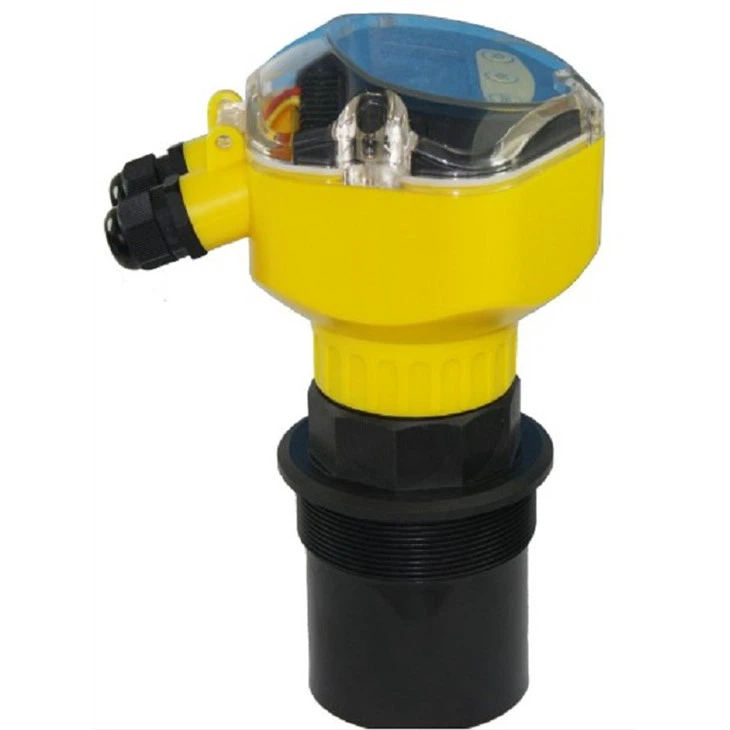
First, let's briefly review how Ultrasonic Level Meters work. An Ultrasonic Level Meter operates on the principle of sending out ultrasonic waves towards the liquid surface. These waves travel through the air above the liquid and bounce back upon hitting the liquid surface. The device then calculates the distance to the liquid surface based on the time it takes for the waves to travel to the surface and back. From this distance, the level of the liquid in the container can be determined.
Characteristics of High - Viscosity Liquids
High - viscosity liquids have unique physical properties that differentiate them from low - viscosity counterparts. Viscosity refers to a fluid's resistance to flow. High - viscosity liquids such as honey, molasses, or certain industrial lubricants flow very slowly because their molecules have strong intermolecular forces, which make it difficult for them to move past one another.
In addition to slow flow, high - viscosity liquids often have a tendency to form a thick layer on surfaces they come into contact with. This can lead to issues like coating the sensors of measurement devices, which may interfere with the proper operation of the equipment.

Factors Affecting Ultrasonic Level Meter Measurement in High - Viscosity Liquids
Surface Conditions
One of the key factors is the surface condition of high - viscosity liquids. Unlike low - viscosity liquids that usually have smooth, well - defined surfaces, high - viscosity liquids can have uneven or rippling surfaces. This is because they take longer to settle after any agitation. These irregularities can scatter the ultrasonic waves, causing inaccurate reflections. The scattered waves may not return to the sensor as expected, leading to errors in the time - of - flight measurement and, consequently, incorrect level readings.
Coating and Clinging
As mentioned earlier, high - viscosity liquids have a strong tendency to coat surfaces. The ultrasonic sensor of the level meter can get coated with the liquid over time. This coating can dampen the transmission and reception of ultrasonic waves. The signal strength may decrease significantly, making it more difficult for the meter to detect the reflected waves accurately. In some cases, the coating may even block the waves completely, leading to a loss of measurement.
Temperature and Density
High - viscosity liquids are often more sensitive to temperature changes compared to low - viscosity ones. Temperature variations can cause changes in the density and viscosity of these liquids. Since the speed of ultrasonic waves can be affected by the density of the medium through which they travel, fluctuations in the liquid's density can lead to errors in the level measurement. Additionally, thermal expansion or contraction of the liquid can change its volume and level, further complicating the measurement process.
Solutions and Adaptations
Sensor Design
To overcome the challenges posed by high - viscosity liquids, our Ultrasonic Level Meters are equipped with specially designed sensors. These sensors are built to minimize the impact of liquid coating. They have a smooth, non - stick surface that reduces the amount of liquid that can cling to them. Additionally, the sensor's shape is optimized to ensure that any liquid that does come into contact with it drains off quickly.
Signal Processing Technology
Our level meters feature advanced signal processing algorithms. These algorithms can filter out the noise caused by scattered waves and can still accurately calculate the distance to the liquid surface even when the received signal is weak. They also have the ability to adapt to changes in the properties of the liquid over time, such as changes in density due to temperature variations.
Mounting and Installation
Proper mounting and installation of the Ultrasonic Level Meter are crucial when measuring high - viscosity liquids. The meter should be installed in a position where the ultrasonic waves have a clear path to the liquid surface without any obstructions. It's also important to ensure that the meter is installed at an appropriate distance from the liquid surface, considering the possible surface irregularities of high - viscosity liquids.
Practical Applications and Case Studies
We have supplied our Ultrasonic Level Meters to various industries dealing with high - viscosity liquids. For example, in the food industry, companies producing honey or syrup often use our meters to monitor the level of their products in storage tanks. Our meters have proven to be reliable in these applications, providing accurate level measurements despite the high viscosity of the liquids.
In the chemical industry, where high - viscosity lubricants and polymers are stored and processed, our Ultrasonic Level Meters have also been well - received. The advanced features of our meters have allowed these companies to optimize their production processes by accurately controlling the level of high - viscosity liquids in their tanks.
Conclusion
So, can an Ultrasonic Level Meter measure the level of liquids with high viscosity? The answer is yes, but with certain considerations and adaptations. Our Ultrasonic Level Meters are designed to handle the challenges presented by high - viscosity liquids through innovative sensor design, advanced signal processing technology, and proper installation guidelines.
If you are in an industry that deals with high - viscosity liquids and are looking for a reliable level measurement solution, we invite you to contact us for a detailed discussion. Our team of experts can provide you with more information about our products and how they can best meet your specific needs. We look forward to collaborating with you to achieve accurate and efficient level measurement in your operations.
References
- Smith, J. (2018). Principles of Ultrasonic Sensing. Publisher: TechBooks.
- Johnson, R. (2019). Viscosity and Its Impact on Fluid Measurement. Journal of Fluid Science, 23(2), 45 - 60.
- Thompson, A. (2020). Industrial Applications of Ultrasonic Level Meters. Industrial Measurement Review, 15(3), 78 - 85.


