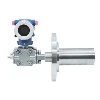
As a supplier of Ultrasonic Level Meter, I am often asked whether an ultrasonic level meter can be used in an open tank. The short answer is yes, but there are several factors to consider to ensure accurate and reliable measurements. In this blog post, I will explore the suitability of ultrasonic level meters for open tanks, discuss the advantages and limitations, and provide some practical tips for using them effectively.
How Ultrasonic Level Meters Work
Before delving into the use of ultrasonic level meters in open tanks, it's important to understand how they operate. Ultrasonic level meters work on the principle of measuring the time it takes for an ultrasonic pulse to travel from the sensor to the surface of the liquid and back. The sensor emits a high-frequency sound wave that travels through the air and reflects off the liquid surface. The meter then calculates the distance to the liquid surface based on the time of flight of the sound wave and the known speed of sound in air.
Advantages of Using Ultrasonic Level Meters in Open Tanks
Non-Contact Measurement
One of the primary advantages of ultrasonic level meters is their non-contact measurement principle. This means that the sensor does not need to come into direct contact with the liquid, which is particularly beneficial in open tanks where the liquid may be corrosive, viscous, or contain solids. Non-contact measurement also eliminates the need for invasive installation, reducing the risk of leaks and contamination.
Easy Installation
Ultrasonic level meters are relatively easy to install in open tanks. They can be mounted on the top of the tank using a bracket or flange, and the sensor can be adjusted to point directly at the liquid surface. This makes them a cost-effective solution for monitoring liquid levels in open tanks, especially in applications where multiple tanks need to be monitored.
Wide Range of Applications
Ultrasonic level meters can be used to measure the level of a variety of liquids in open tanks, including water, oil, chemicals, and slurries. They are suitable for use in a wide range of industries, such as water and wastewater treatment, oil and gas, chemical processing, and food and beverage.
High Accuracy
Modern ultrasonic level meters offer high accuracy and repeatability, with measurement errors typically within ±0.25% to ±0.5% of the full scale. This makes them suitable for applications where precise level measurement is required, such as in storage tanks, process vessels, and water treatment plants.
Limitations of Using Ultrasonic Level Meters in Open Tanks
Environmental Conditions
The performance of ultrasonic level meters can be affected by environmental conditions, such as temperature, humidity, and air turbulence. Changes in temperature and humidity can affect the speed of sound in air, which can lead to measurement errors. Air turbulence, such as wind or drafts, can also cause the ultrasonic pulse to scatter or reflect off objects other than the liquid surface, resulting in inaccurate readings.
Foam and Vapor
Foam and vapor on the surface of the liquid can also affect the accuracy of ultrasonic level meters. Foam can absorb or scatter the ultrasonic pulse, preventing it from reaching the liquid surface and reflecting back to the sensor. Vapor can also cause the ultrasonic pulse to refract or absorb, leading to measurement errors.
Tank Geometry
The geometry of the open tank can also affect the performance of ultrasonic level meters. Irregularly shaped tanks, such as those with sloping sides or baffles, can cause the ultrasonic pulse to reflect off the tank walls or other objects, resulting in inaccurate readings. In addition, the presence of agitators or other equipment in the tank can create turbulence and interference, affecting the accuracy of the measurement.
Mounting Location
The mounting location of the ultrasonic level meter is critical for accurate measurement. The sensor should be mounted directly above the liquid surface and at a sufficient distance to ensure that the ultrasonic pulse can travel freely without being obstructed. In addition, the sensor should be mounted in a location where it is protected from environmental factors, such as wind, rain, and direct sunlight.
Practical Tips for Using Ultrasonic Level Meters in Open Tanks
Choose the Right Sensor
When selecting an ultrasonic level meter for an open tank, it's important to choose a sensor that is suitable for the specific application. Consider factors such as the type of liquid being measured, the temperature and pressure of the environment, and the size and shape of the tank. Make sure to choose a sensor with a sufficient range and accuracy for the application.
Install the Sensor Correctly
Proper installation of the ultrasonic level meter is essential for accurate measurement. Follow the manufacturer's instructions carefully when installing the sensor, and make sure to mount it at the correct height and angle. Use a bracket or flange to secure the sensor to the top of the tank, and ensure that it is level and stable.
Calibrate the Meter Regularly
Regular calibration of the ultrasonic level meter is necessary to ensure accurate and reliable measurement. Calibration should be performed at least once a year, or more frequently if the environment or application conditions change. Follow the manufacturer's instructions for calibration, and use a calibrated reference standard to verify the accuracy of the meter.


Monitor the Environment
Keep an eye on the environmental conditions in and around the open tank, and take steps to minimize the effects of temperature, humidity, and air turbulence. Use a weather shelter or enclosure to protect the sensor from the elements, and install a windbreak or baffle to reduce the effects of wind.
Maintain the Meter Properly
Regular maintenance of the ultrasonic level meter is important to ensure its long-term performance. Clean the sensor regularly to remove any dirt, debris, or buildup that may affect the accuracy of the measurement. Check the wiring and connections for any signs of damage or wear, and replace any faulty components as needed.
Conclusion
In conclusion, an ultrasonic level meter can be used in an open tank, but it's important to consider the specific application and environmental conditions to ensure accurate and reliable measurement. Ultrasonic level meters offer several advantages, such as non-contact measurement, easy installation, and high accuracy, but they also have some limitations, such as sensitivity to environmental conditions and the presence of foam and vapor. By choosing the right sensor, installing it correctly, calibrating it regularly, monitoring the environment, and maintaining it properly, you can use an ultrasonic level meter effectively in an open tank.
If you are interested in learning more about ultrasonic level meters or have any questions about using them in your open tank application, please feel free to contact us. Our team of experts is available to provide you with technical support and guidance to help you choose the right solution for your needs.
References
- "Ultrasonic Level Measurement," Emerson Automation Solutions.
- "Level Measurement Technology," Siemens AG.
- "Ultrasonic Level Sensors: Principles and Applications," Honeywell International Inc.