Hey there! As a supplier of Ultrasonic Level Meters, I often get asked if our Ultrasonic Level Meter can be used in a small tank. Well, let's dive right into this topic and find out.
First off, let's understand how an ultrasonic level meter works. It sends out ultrasonic waves that bounce off the surface of the liquid in the tank. Then it measures the time it takes for these waves to come back. Based on that time, it figures out the distance from the sensor to the liquid surface, and voila, we know the level of the liquid in the tank.
Now, when it comes to small tanks, there are a few things to consider. One of the main factors is the size of the tank. Ultrasonic level meters are pretty versatile, but small tanks can present some unique challenges. For instance, the sensor needs enough space to send out and receive the ultrasonic waves properly. If the tank is too small, the waves might bounce off the walls of the tank before they reach the liquid surface. This can cause inaccurate readings.
But don't worry! Many modern ultrasonic level meters are designed to handle these issues. They have advanced signal processing algorithms that can filter out the unwanted echoes from the tank walls. So, even in a small tank, they can still give you a fairly accurate reading.

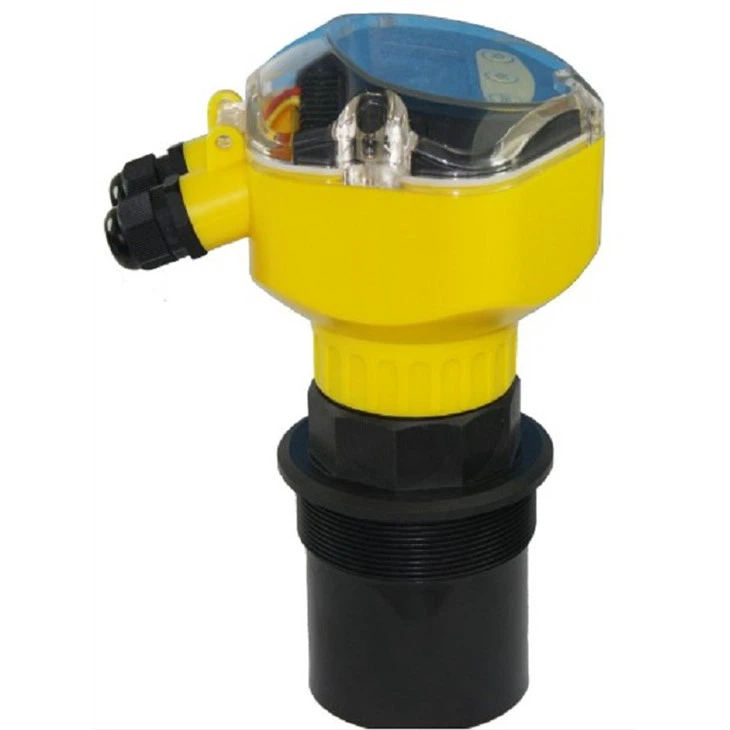
Another thing to think about is the shape of the tank. Small tanks can come in all sorts of shapes - cylindrical, rectangular, or even irregular. The shape can affect how the ultrasonic waves travel inside the tank. For example, in a rectangular tank with sharp corners, the waves might reflect in strange ways, which can mess up the reading. However, some ultrasonic level meters are equipped with special sensors that can adapt to different tank shapes. They can analyze the wave patterns and make adjustments to get an accurate level measurement.
The type of liquid in the tank also matters. Different liquids have different acoustic properties. Some liquids might absorb or scatter the ultrasonic waves more than others. For example, a thick, viscous liquid might dampen the waves, making it harder for the sensor to get a clear signal. In a small tank, this effect can be even more pronounced because there's less space for the waves to travel. But again, many of our ultrasonic level meters are designed to work with a wide range of liquids. They can compensate for the differences in acoustic properties and still provide reliable measurements.
Let's talk about the installation of the ultrasonic level meter in a small tank. It's crucial to install it correctly to get accurate readings. You need to make sure that the sensor is mounted at the right height and angle. In a small tank, there's not much room for error. If the sensor is too close to the liquid surface, it might get splashed or covered with the liquid, which can damage the sensor and affect the reading. On the other hand, if it's too far away, the ultrasonic waves might lose their strength before they reach the liquid. We provide detailed installation instructions with our ultrasonic level meters, and our technical support team is always ready to help you with the installation process.
One of the advantages of using an ultrasonic level meter in a small tank is its non - intrusive nature. You don't have to put anything inside the tank, which is great for small tanks where space is limited. There's no risk of contamination of the liquid, and it's easy to install and maintain. You can just mount the sensor on the top of the tank, and it'll start working right away.
Now, let's look at some real - world examples. We've had customers who used our ultrasonic level meters in small chemical storage tanks. These tanks were only a few feet in diameter, but our meters were able to accurately measure the level of the chemicals inside. They were able to monitor the inventory of the chemicals and avoid over - filling or running out of stock.
We also had a customer who used our meters in a small water tank for a domestic water supply system. The tank was relatively small, but the ultrasonic level meter was able to give them a clear indication of the water level. This helped them manage their water usage and plan for refills.
In terms of cost - effectiveness, using an ultrasonic level meter in a small tank can be a great choice. Compared to some other types of level measurement devices, ultrasonic level meters are generally more affordable. They also have a long lifespan and low maintenance requirements. You don't have to spend a lot of money on replacement parts or regular servicing.
So, to answer the question, yes, an ultrasonic level meter can definitely be used in a small tank. While there are some challenges to overcome, with the right technology and proper installation, it can provide accurate and reliable level measurements.
If you're considering using an ultrasonic level meter for your small tank, we'd love to hear from you. Our team of experts can help you choose the right model based on your specific tank size, shape, and the type of liquid you're storing. We offer a wide range of ultrasonic level meters with different features and specifications to meet your needs. Whether you're in the industrial sector, agriculture, or domestic applications, we have a solution for you.
Don't hesitate to reach out to us for more information or to start a procurement discussion. We're here to help you find the best level measurement solution for your small tank.
References:
- "Ultrasonic Level Measurement Technology" - A technical guide on ultrasonic level meters and their applications.
- "Acoustic Properties of Liquids and Their Impact on Ultrasonic Sensors" - A research paper on how different liquids affect ultrasonic wave propagation.