

As a supplier of vortex flowmeters, I often encounter inquiries from customers regarding the suitability of our products in various environments, especially cryogenic ones. Cryogenic environments, typically defined as those with temperatures below -150°C, present unique challenges that need to be carefully considered when selecting a flowmeter. In this blog post, I will delve into the technical aspects of vortex flowmeters and explore whether they can be effectively used in cryogenic settings.
Understanding Vortex Flowmeters
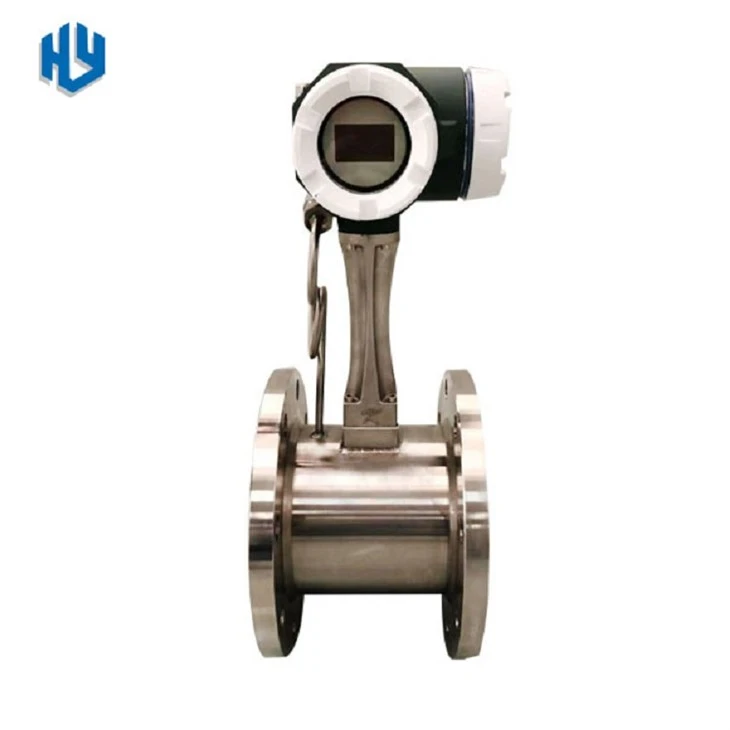
Before we discuss their performance in cryogenic environments, let's briefly understand how vortex flowmeters work. A vortex flowmeter operates based on the principle of the von Kármán vortex street. When a fluid flows past a bluff body (also known as a shedder bar) placed in the flow path, it creates alternating vortices on either side of the bluff body. The frequency of these vortices is directly proportional to the fluid velocity, and by measuring this frequency, the flow rate of the fluid can be determined.
Vortex flowmeters offer several advantages, such as high accuracy, wide turndown ratio, and low maintenance requirements. They are commonly used in a variety of industries, including chemical, oil and gas, and power generation, for measuring the flow of liquids, gases, and steam.
Challenges in Cryogenic Environments
Cryogenic environments pose several challenges for flowmeters, including:
Material Compatibility
At extremely low temperatures, the mechanical properties of materials can change significantly. Many common materials used in flowmeters, such as plastics and some metals, become brittle and may crack or fracture under stress. This can lead to leaks, inaccurate measurements, and even complete failure of the flowmeter.
Thermal Expansion and Contraction
The large temperature differences between the cryogenic fluid and the surrounding environment can cause significant thermal expansion and contraction of the flowmeter components. If not properly accounted for, this can result in misalignment of the bluff body, changes in the flow path geometry, and ultimately, inaccurate flow measurements.
Condensation and Frost Formation
Cryogenic fluids have very low temperatures, which can cause moisture in the surrounding air to condense and freeze on the surface of the flowmeter. This can affect the operation of the sensor and lead to measurement errors.
Viscosity Changes
The viscosity of fluids can change significantly at cryogenic temperatures. This can affect the formation and shedding of vortices, which in turn can impact the accuracy of the flow measurement.
Can Vortex Flowmeters Overcome These Challenges?
Despite the challenges posed by cryogenic environments, vortex flowmeters can be designed and engineered to operate effectively in these conditions. Here are some considerations:
Material Selection
When selecting materials for a cryogenic vortex flowmeter, it is crucial to choose those that can maintain their mechanical properties at low temperatures. Stainless steel is a commonly used material due to its good strength, corrosion resistance, and low thermal expansion coefficient. Other materials, such as titanium and some special alloys, may also be suitable depending on the specific application requirements.
Thermal Design
To minimize the effects of thermal expansion and contraction, the flowmeter should be designed with appropriate thermal insulation and expansion joints. This helps to ensure that the bluff body remains properly aligned and the flow path geometry remains stable, even under large temperature variations.

Anti-Condensation Measures
To prevent condensation and frost formation on the flowmeter surface, special coatings or insulation materials can be applied. Additionally, the flowmeter can be equipped with a heating system to maintain a suitable temperature and prevent moisture from condensing.
Viscosity Compensation
Since the viscosity of fluids can change at cryogenic temperatures, some vortex flowmeters are equipped with viscosity compensation algorithms. These algorithms adjust the flow measurement based on the known viscosity-temperature relationship of the fluid, ensuring accurate measurements over a wide range of temperatures.
Our Vortex Flowmeters for Cryogenic Applications
At our company, we offer a range of vortex flowmeters that are specifically designed for cryogenic applications. Our Compact Vortex Flowmeter is a compact and lightweight solution that is ideal for space-constrained cryogenic installations. It is constructed from high-quality stainless steel and features a robust design that can withstand the harsh conditions of cryogenic environments.
In addition, our Temperature And Pressure Compensate Vortex Flowmeter and Temperature And Pressure Compensate Flowmeter are equipped with advanced temperature and pressure compensation algorithms. These algorithms ensure accurate flow measurements even when the fluid properties change due to temperature and pressure variations in cryogenic applications.
Conclusion
In conclusion, while cryogenic environments present unique challenges for flowmeters, vortex flowmeters can be successfully used in these conditions with proper design and engineering. By selecting the right materials, implementing appropriate thermal design and anti-condensation measures, and using viscosity compensation algorithms, vortex flowmeters can provide accurate and reliable flow measurements in cryogenic applications.
If you are looking for a reliable vortex flowmeter for your cryogenic application, we encourage you to contact us for more information. Our team of experts will be happy to assist you in selecting the right flowmeter for your specific needs and provide you with a customized solution. We look forward to the opportunity to work with you and help you achieve your flow measurement goals in cryogenic environments.
References
- "Flow Measurement Handbook: Industrial Designs and Applications" by Richard W. Miller
- "Cryogenic Engineering" by T. M. Flynn
- Technical literature and product specifications from vortex flowmeter manufacturers


