Hey there! I'm a supplier of Mass Flowmeters, and today I wanna talk about a pretty interesting question: Can a mass flowmeter measure multi - phase flow?
Let's first get a quick understanding of what mass flowmeters are. A Mass Flowmeter is a device that measures the mass flow rate of a fluid traveling through a tube. You can check out more details about it on our website Mass Flowmeter. Mass flowmeters are super useful in a bunch of industries, like chemical, food and beverage, and oil and gas. They offer accurate measurements of the mass of the fluid, which is crucial for many processes.
Now, what is multi - phase flow? Well, multi - phase flow occurs when two or more phases (like gas and liquid, or solid and liquid) flow together in a pipeline. This is quite common in real - world applications. For example, in the oil and gas industry, the well - head fluid often contains a mixture of oil, gas, and water.
So, can a mass flowmeter handle multi - phase flow? The short answer is, it depends.
Types of Mass Flowmeters and Their Suitability for Multi - Phase Flow
Coriolis Mass Flowmeters
Coriolis mass flowmeters are widely used and pretty well - known. They work based on the Coriolis effect, which causes a tube to twist when a fluid flows through it, and the amount of twist is related to the mass flow rate. We have a great option for drinking applications, the Coriolis Mass Flowmeter for Drinking.
When it comes to multi - phase flow, Coriolis mass flowmeters can work to some extent. For a relatively low - void - fraction multi - phase flow (where the gas volume fraction is not too high), they can still provide reasonable mass flow rate measurements. However, as the void fraction increases, things get a bit tricky.
The presence of gas bubbles in a liquid - gas multi - phase flow can cause the density of the mixture to vary significantly. Since Coriolis mass flowmeters rely on density measurements to calculate mass flow, large density variations can lead to measurement errors. The gas bubbles can also cause the flow to become more turbulent, which further affects the accuracy of the measurement.
But, with some advanced signal processing techniques and calibration, we can improve the performance of Coriolis mass flowmeters in multi - phase flow situations. For instance, by using additional sensors to measure the density and phase distribution more accurately, we can compensate for the errors caused by the multi - phase nature of the flow.
Thermal Mass Flowmeters
Thermal mass flowmeters measure the mass flow rate based on the heat transfer between a heated sensor and the flowing fluid. They are commonly used for gas flow measurements.
In multi - phase flow, thermal mass flowmeters face some challenges. If there is a liquid phase present in the gas - liquid multi - phase flow, the liquid can wet the sensor, which changes the heat transfer characteristics. This can lead to inaccurate measurements. Also, the presence of solid particles in a gas - solid multi - phase flow can cause abrasion of the sensor, reducing its lifespan and accuracy.
However, in some cases where the liquid or solid content is very low, thermal mass flowmeters can still give a rough estimate of the mass flow rate of the gas phase.
Factors Affecting Mass Flowmeter Performance in Multi - Phase Flow
Phase Composition
As I mentioned earlier, the composition of the multi - phase flow, such as the ratio of gas to liquid or solid to liquid, has a significant impact on the performance of mass flowmeters. A high - void - fraction gas - liquid flow is much more difficult to measure accurately than a low - void - fraction one.
Flow Regime
The flow regime of the multi - phase flow also matters. Different flow regimes, like stratified flow, slug flow, and annular flow, have different flow characteristics. For example, in slug flow, large slugs of liquid alternate with gas pockets. This kind of unsteady flow can cause sudden changes in the density and flow rate, which are hard for mass flowmeters to handle.
Velocity
The velocity of the multi - phase flow affects the performance of mass flowmeters. High - velocity flows can cause more turbulence, which increases the measurement errors. On the other hand, low - velocity flows may not provide enough momentum for some types of mass flowmeters to work properly.
Our High - Accuracy Flowmeters for Challenging Situations
We understand the challenges of measuring multi - phase flow, and that's why we've developed High Accuracy Flowmeter. These flowmeters are designed to handle a wide range of multi - phase flow conditions.
Our high - accuracy flowmeters use advanced algorithms and sensor technologies. They can adapt to different phase compositions and flow regimes. For example, they can continuously monitor the density and velocity of the multi - phase flow and adjust the measurement parameters accordingly.
In addition, we offer calibration services to ensure that our flowmeters provide the most accurate measurements possible. We can calibrate the flowmeters using actual multi - phase flow samples from your specific application, so that the flowmeters are optimized for your unique situation.
Conclusion
In conclusion, while measuring multi - phase flow with a mass flowmeter is not without challenges, it is definitely possible. Different types of mass flowmeters have different levels of suitability for multi - phase flow, and the performance depends on various factors such as phase composition, flow regime, and velocity.
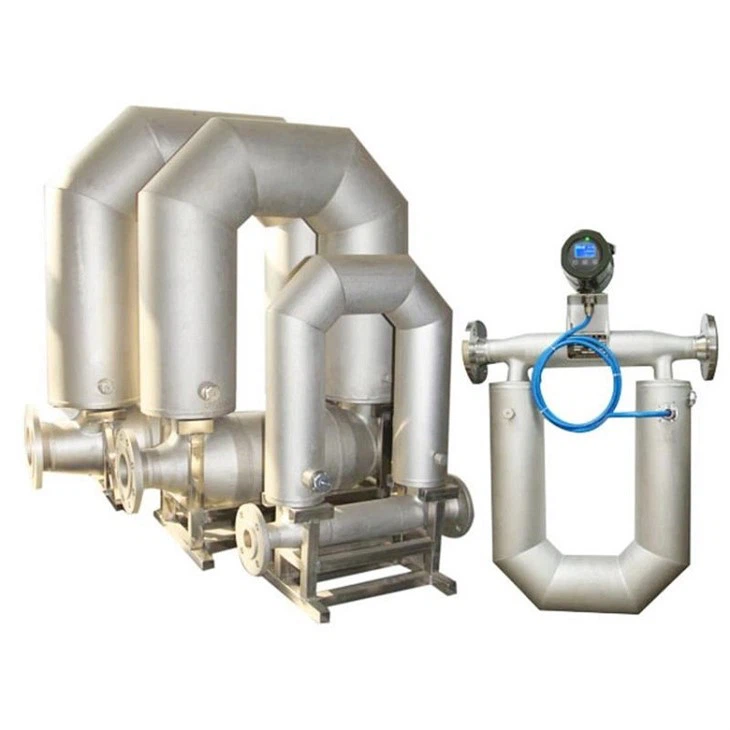

If you're facing the problem of measuring multi - phase flow in your industry, don't worry. We have the expertise and the products to help you. Our Mass Flowmeters are designed to meet the needs of different applications, and we can provide customized solutions for multi - phase flow measurement.
If you're interested in learning more about our products or have any questions about mass flowmeter applications in multi - phase flow, feel free to reach out. We're always here to discuss your requirements and help you find the best solution for your business.
References
- Baker, O. (1954). Simultaneous flow of oil and gas. Oil and Gas Journal, 52(43), 185 - 195.
- Collier, J. G., & Thome, J. R. (1994). Convective boiling and condensation. Oxford University Press.
- Hewitt, G. F., & Hall - Taylor, N. S. (1970). Annular two - phase flow. Pergamon Press.