

As a supplier of Liquid Density Meters, I often encounter inquiries from customers about the applicability of our products in various environments, especially high - temperature settings. This blog aims to explore whether a liquid density meter can be used in high - temperature environments and provide insights into the considerations and solutions.
Understanding Liquid Density Meters
Before delving into the high - temperature aspect, it's essential to understand what a liquid density meter is. A Liquid Density Meter is an instrument used to measure the density of liquids. Density is a fundamental physical property that can provide valuable information about the composition, purity, and characteristics of a liquid substance. There are different types of liquid density meters, including those based on vibration, buoyancy, and differential pressure principles.
Challenges in High - Temperature Environments
When it comes to high - temperature environments, several challenges arise for liquid density meters.
Material Compatibility
High temperatures can cause materials to expand, contract, or degrade. The components of a density meter, such as sensors, housings, and connecting parts, need to be made of materials that can withstand the elevated temperatures without significant changes in their physical or chemical properties. For example, if the sensor material expands at high temperatures, it can lead to inaccurate density measurements. Some common materials used in high - temperature applications include certain types of stainless steel and ceramic, which have relatively low coefficients of thermal expansion and good heat resistance.
Sensor Performance
The performance of the sensor is crucial for accurate density measurement. High temperatures can affect the electrical properties of sensors, such as resistance and capacitance. In a vibrating tube density meter, for instance, the resonance frequency of the tube can be altered by high temperatures, leading to errors in density calculation. Additionally, the viscosity of the liquid being measured may change at high temperatures, which can also impact the sensor's ability to accurately measure density.
Calibration Stability
Calibration is essential for ensuring the accuracy of a density meter. However, high - temperature environments can cause the calibration of the meter to drift over time. The changes in the physical properties of the sensor and the liquid due to temperature variations can make the initial calibration invalid. Regular recalibration is often required in high - temperature applications to maintain measurement accuracy.
Types of Liquid Density Meters and Their High - Temperature Suitability
Differential Pressure - Type Density Meters
Differential pressure - type density meters measure the density of a liquid by detecting the pressure difference between two points in the liquid column. These meters can be suitable for high - temperature environments if they are properly designed. The pressure sensors used in these meters need to be able to withstand high temperatures. Some differential pressure - type density meters are equipped with high - temperature - resistant diaphragms and pressure transmitters. For example, Online Density Transmitter based on differential pressure principle can be used in certain high - temperature industrial processes, such as in the chemical and petrochemical industries.
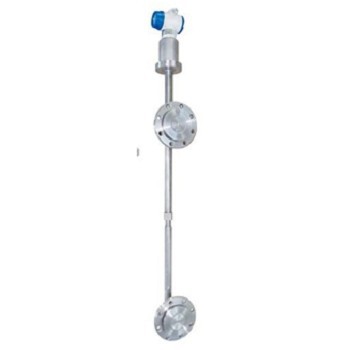

Vibration - Type Density Meters
Vibration - type density meters work by measuring the change in the resonance frequency of a vibrating tube filled with the liquid. While these meters are known for their high accuracy and fast response, they can be more sensitive to temperature changes. The vibrating tube needs to be made of a material with good thermal stability to minimize the effect of temperature on the resonance frequency. Some advanced vibration - type density meters are designed with temperature compensation algorithms to correct for the temperature - induced errors, but they still have limitations in extremely high - temperature environments.
Buoyancy - Type Density Meters
Buoyancy - type density meters operate based on the principle of Archimedes' buoyancy. A float or a buoyant object is submerged in the liquid, and the displacement of the object is related to the density of the liquid. These meters can be used in high - temperature environments, but the float material needs to be carefully selected. For example, in some high - temperature applications, floats made of high - temperature - resistant plastics or metals are used. However, the movement of the float may be affected by the increased viscosity of the liquid at high temperatures, which can introduce measurement errors.
Solutions for Using Liquid Density Meters in High - Temperature Environments
Cooling Systems
One way to use a liquid density meter in a high - temperature environment is to implement a cooling system. This can involve using a heat exchanger to cool the liquid before it enters the density meter or using a cooling jacket around the meter itself. By reducing the temperature of the liquid and the meter components, the negative effects of high temperatures on the meter's performance can be minimized. However, cooling systems add complexity and cost to the installation, and they need to be carefully designed and maintained to ensure reliable operation.
High - Temperature - Resistant Materials
As mentioned earlier, using high - temperature - resistant materials in the construction of the density meter is crucial. Manufacturers can select materials such as special alloys and ceramics that can withstand the high temperatures without significant degradation. These materials are often more expensive than standard materials, but they can ensure the long - term reliability and accuracy of the density meter in high - temperature applications.
Temperature Compensation
Most modern liquid density meters are equipped with temperature compensation functions. These functions use algorithms to correct the density measurement based on the temperature of the liquid and the sensor. By continuously monitoring the temperature and adjusting the density reading accordingly, the accuracy of the measurement can be improved. However, temperature compensation has its limitations, especially in extremely high - temperature or rapidly changing temperature environments.
Applications in High - Temperature Industries
There are several industries where liquid density meters are required to operate in high - temperature environments.
Chemical Industry
In chemical processes, such as the production of polymers and high - temperature reactions, the density of the liquid reactants and products needs to be monitored. For example, in a polymerization reactor, the density of the polymer solution can provide information about the degree of polymerization. Liquid density meters used in these applications need to be able to withstand the high temperatures (often above 100°C) and the corrosive nature of the chemicals. A Slurry Density Meter may also be used in some chemical processes where slurries are involved, and it needs to be suitable for high - temperature and abrasive conditions.
Petrochemical Industry
The petrochemical industry involves high - temperature processes such as refining and cracking. Density measurement is important for quality control and process optimization. Liquid density meters are used to measure the density of crude oil, refined products, and various chemical intermediates. These meters need to operate at high temperatures (up to several hundred degrees Celsius) and in the presence of volatile and flammable substances. Therefore, they need to be explosion - proof and highly reliable.
Conclusion
In conclusion, a liquid density meter can be used in high - temperature environments, but it requires careful consideration of various factors. Material selection, sensor performance, calibration stability, and the implementation of appropriate solutions such as cooling systems and temperature compensation are all crucial for ensuring accurate and reliable density measurement. Different types of density meters have different levels of suitability for high - temperature applications, and the choice of the meter depends on the specific requirements of the application.
If you are in need of a liquid density meter for high - temperature applications or have any questions about our products, we invite you to contact us for further discussion and potential procurement. Our team of experts is ready to provide you with customized solutions based on your specific needs.
References
- ASTM International. "Standard Test Methods for Density, Relative Density (Specific Gravity), or API Gravity of Crude Petroleum and Liquid Petroleum Products by Hydrometer Method." ASTM D1298 - 12 (2017).
- ISO 12185:1996. "Crude petroleum and petroleum products — Determination of density — Oscillating U - tube method."
- Oswalt, C. M., & Rinker, E. B. (2004). "Temperature - compensated density measurement using a vibrating tube densimeter." Journal of Chemical and Engineering Data, 49(6), 1623 - 1627.


