Can a DP Type Density Meter measure the density of emulsions?
Emulsions are a common type of colloid in which one liquid is dispersed in another immiscible liquid in the form of droplets. They are widely used in various industries, such as food, cosmetics, pharmaceuticals, and petroleum. Measuring the density of emulsions accurately is crucial for quality control, process optimization, and product development. As a supplier of DP Type Density Meters, I often receive inquiries about whether our meters can be used to measure the density of emulsions. In this blog post, I will discuss the principles of DP Type Density Meters and their applicability to emulsion density measurement.
Principles of DP Type Density Meters
DP (Differential Pressure) Type Density Meters work based on the principle that the pressure difference between two points in a fluid column is proportional to the density of the fluid and the height of the fluid column. The basic formula for calculating density using a DP meter is:
ρ = ΔP / (g * h)
where ρ is the density of the fluid, ΔP is the differential pressure between two points in the fluid column, g is the acceleration due to gravity, and h is the height of the fluid column between the two pressure measurement points.
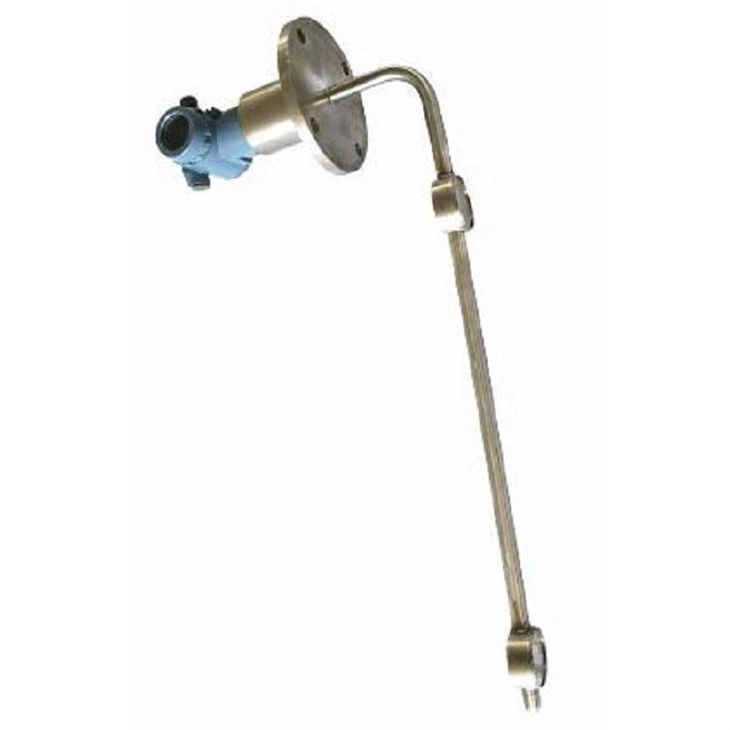
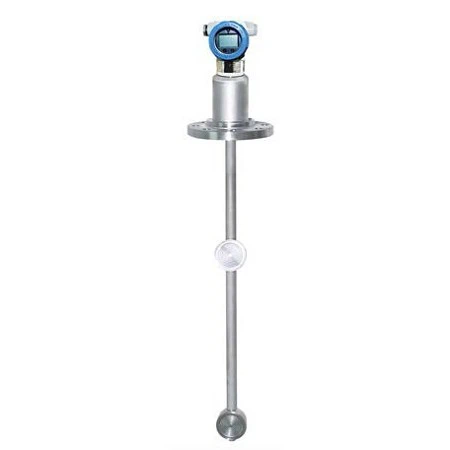
In a DP Type Density Meter, two pressure sensors are installed at different heights in the fluid container or pipeline. The pressure difference between the two sensors is measured, and the density of the fluid is calculated using the above formula. These meters are known for their simplicity, reliability, and relatively low cost compared to some other types of density measurement devices.
Challenges in Measuring Emulsion Density
Emulsions present several challenges when it comes to density measurement. First, emulsions are often non - homogeneous, with droplets of one phase dispersed in another. The size, distribution, and stability of these droplets can vary, which can lead to local variations in density within the emulsion. Second, emulsions may have a complex rheological behavior, such as shear - thinning or shear - thickening properties. This means that the apparent density of the emulsion can change depending on the flow rate and shear conditions during measurement. Third, some emulsions may be prone to coalescence or phase separation over time, which can affect the accuracy of density measurements.
Applicability of DP Type Density Meters to Emulsion Density Measurement
Despite the challenges, DP Type Density Meters can be used to measure the density of emulsions under certain conditions.
Homogeneous Emulsions: If the emulsion is relatively homogeneous, with small and uniformly distributed droplets, a DP Type Density Meter can provide a reasonably accurate measurement of the average density. For example, in some well - formulated food emulsions, such as mayonnaise or salad dressings, where the droplet size is carefully controlled during the manufacturing process, DP meters can be used to monitor the density during production. This helps ensure consistent product quality and can be used for in - line process control.

Stable Emulsions: Stable emulsions, which do not readily undergo phase separation or coalescence, are more suitable for density measurement using DP meters. In the pharmaceutical industry, for instance, some emulsion - based drugs are formulated to be stable over a certain period. A DP Type Density Meter can be used to measure the density of these emulsions during the manufacturing process to ensure proper formulation and dosage.
Low - Shear Conditions: Since the rheological properties of emulsions can affect density measurements, it is important to use DP meters under low - shear conditions. This can be achieved by using appropriate flow rates and pipe diameters in the measurement system. For example, in a pipeline where the emulsion is flowing, the flow rate should be adjusted to minimize shear forces on the emulsion droplets. By doing so, the measured density will be closer to the true density of the emulsion.
Advantages of Using DP Type Density Meters for Emulsion Density Measurement
There are several advantages of using DP Type Density Meters for measuring the density of emulsions:
Cost - Effective: DP meters are generally more affordable compared to some other advanced density measurement technologies, such as vibrating tube density meters. This makes them a cost - effective solution for industries where multiple density measurement points are required, such as large - scale food or cosmetic production facilities.
Simple Installation and Maintenance: These meters are relatively easy to install in existing pipelines or tanks. They have fewer moving parts compared to some other types of density meters, which means lower maintenance requirements. This is particularly important in industries where downtime for maintenance can be costly.
Compatibility with Various Emulsion Types: DP Type Density Meters can be used with a wide range of emulsion types, including oil - in - water (O/W) and water - in - oil (W/O) emulsions. They can also be used in emulsions with different viscosities, as long as the above - mentioned conditions for homogeneity, stability, and low - shear are met.
Limitations of DP Type Density Meters for Emulsion Density Measurement
However, it is important to note the limitations of DP Type Density Meters when measuring the density of emulsions:
Lack of Real - Time Droplet Information: DP meters measure the average density of the emulsion as a whole. They do not provide information about the size, distribution, or stability of the emulsion droplets. In some applications, such as research and development of new emulsion products, more detailed information about the droplet characteristics may be required.
Sensitivity to Temperature and Pressure Changes: Like all density measurement devices, DP Type Density Meters are sensitive to temperature and pressure changes. Emulsions may also have different thermal expansion coefficients and compressibility compared to pure liquids, which can affect the accuracy of density measurements. Therefore, it is necessary to compensate for temperature and pressure changes in the measurement system.
Our DP Type Density Meter Products for Emulsion Density Measurement
As a supplier of DP Type Density Meters, we offer a range of products that are suitable for measuring the density of emulsions. Our Top Mounted Online Density Meter is designed for easy installation on top of tanks or vessels. It can be used to continuously monitor the density of emulsions in large - scale storage or processing facilities.
Our DP Type Liquid Density Transmitter is a highly accurate and reliable device that can be integrated into existing control systems. It provides real - time density data, which can be used for process automation and quality control in emulsion production.
In addition, our Liquid Density Meter is a versatile product that can be used in a variety of applications, including emulsion density measurement. It is available in different configurations to meet the specific requirements of different industries.
Conclusion
In conclusion, a DP Type Density Meter can measure the density of emulsions under certain conditions, such as when the emulsion is relatively homogeneous, stable, and measured under low - shear conditions. These meters offer several advantages, including cost - effectiveness, simple installation and maintenance, and compatibility with various emulsion types. However, they also have limitations, such as the lack of real - time droplet information and sensitivity to temperature and pressure changes.
If you are in need of a reliable and cost - effective solution for measuring the density of emulsions, our DP Type Density Meters may be the right choice for you. We are committed to providing high - quality products and excellent customer service. Please feel free to contact us for more information or to discuss your specific requirements. We look forward to the opportunity to work with you on your emulsion density measurement needs.
References
- McClements, D. J. (2005). Food emulsions: principles, practice, and techniques. CRC press.
- Becher, P. (1965). Emulsions: theory and practice. Reinhold Publishing Corporation.
- Rousseau, D. (2009). Handbook of food emulsions: science and technology. CRC press.