Can a concentration meter measure multiple substances? This is a question that often arises in various industries where precise measurement of substance concentrations is crucial. As a supplier of concentration meters, I have encountered this query numerous times from our clients. In this blog, I will delve into the capabilities of concentration meters and explore whether they can indeed measure multiple substances.


Understanding Concentration Meters
Before we discuss the ability to measure multiple substances, let's first understand what a concentration meter is. A concentration meter is an instrument used to determine the concentration of a particular substance in a solution. It works on various principles such as density measurement, refractive index measurement, and conductivity measurement, depending on the type of substance being measured.
Concentration meters are widely used in industries such as food and beverage, pharmaceuticals, chemical processing, and water treatment. In the food and beverage industry, for example, Drinking Concentration Meter are used to measure the sugar content in juices, the alcohol content in wines, and the salt content in brines. In the pharmaceutical industry, concentration meters are used to ensure the correct concentration of active ingredients in medications.
Measuring Single Substances
Most concentration meters are designed to measure the concentration of a single substance accurately. For instance, a density-based concentration meter can measure the concentration of a solute in a solution by measuring the density of the solution. The density of a solution is directly related to the concentration of the solute, and by calibrating the meter with known standards, accurate concentration measurements can be obtained.
Similarly, a refractive index-based concentration meter measures the refractive index of a solution, which also varies with the concentration of the solute. These meters are highly accurate for measuring the concentration of a single substance and are commonly used in industries where high precision is required.
Challenges in Measuring Multiple Substances
Measuring multiple substances simultaneously is a more complex task. The main challenge lies in the fact that the properties used for concentration measurement, such as density and refractive index, are affected by all the substances present in the solution. For example, if a solution contains two solutes, the density of the solution will be a combined effect of the densities of both solutes and the solvent.
Another challenge is the interference between different substances. Some substances may interact with each other in the solution, which can affect the measurement properties. For instance, certain chemicals may form complexes or undergo chemical reactions, leading to changes in density or refractive index that are not directly related to the concentration of the individual substances.
Can Concentration Meters Measure Multiple Substances?
Despite the challenges, some advanced concentration meters are capable of measuring multiple substances. These meters use advanced algorithms and sensor technologies to distinguish between the effects of different substances on the measurement properties.
One approach is to use multi-parameter measurement techniques. For example, a meter may measure both density and refractive index simultaneously. By analyzing the combination of these two parameters, it is possible to separate the contributions of different substances to the overall measurement.
Another approach is to use chemometric methods. Chemometrics is a branch of chemistry that uses mathematical and statistical methods to analyze chemical data. By collecting a large amount of data on the properties of solutions containing different combinations of substances and using chemometric algorithms, it is possible to develop models that can predict the concentrations of multiple substances in a solution.
Advanced Concentration Meters for Multiple Substances
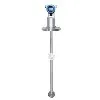
At our company, we offer Online Concentration Transmitter that are capable of measuring multiple substances. These transmitters are equipped with advanced sensors and software that can analyze the complex interactions between different substances in a solution.
Our Tri-clamp Sanitary Concentration Transmitter is specifically designed for applications in the food and beverage and pharmaceutical industries, where sanitary conditions are crucial. These transmitters can measure the concentrations of multiple substances while maintaining high levels of hygiene.
Applications of Multiple Substance Measurement
The ability to measure multiple substances has numerous applications. In the food and beverage industry, it can be used to monitor the quality of products by measuring the concentrations of different ingredients such as sugars, acids, and salts. In the chemical processing industry, it can be used to control chemical reactions by measuring the concentrations of reactants and products in real-time.
In the environmental monitoring field, multiple substance measurement can be used to analyze the quality of water and air by measuring the concentrations of pollutants and other contaminants.
Conclusion
In conclusion, while most concentration meters are designed to measure single substances, advanced concentration meters are capable of measuring multiple substances. These meters use advanced technologies and algorithms to overcome the challenges associated with multiple substance measurement.
At our company, we are committed to providing high-quality concentration meters that can meet the diverse needs of our clients. Whether you need to measure a single substance or multiple substances, our meters offer accurate and reliable measurements.
If you are interested in learning more about our concentration meters or have specific requirements for your application, please feel free to contact us for a detailed discussion. Our team of experts will be happy to assist you in selecting the right concentration meter for your needs and provide you with the necessary technical support.
References
- ASTM International. (20XX). Standard test methods for [relevant measurement technique]. ASTM [standard number].
- ISO. (20XX). International standard for [relevant measurement]. ISO [standard number].
- Textbook on Analytical Chemistry, [Author names], [Publication year], [Publisher].