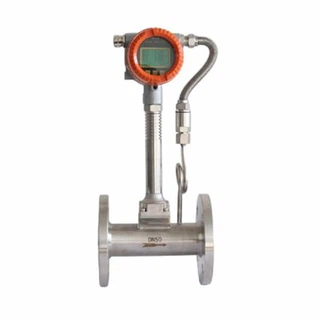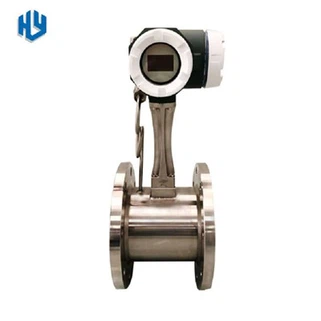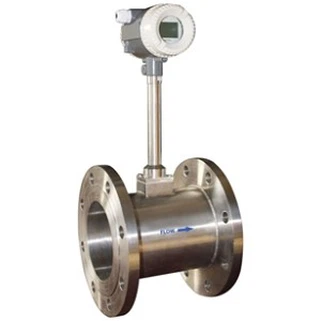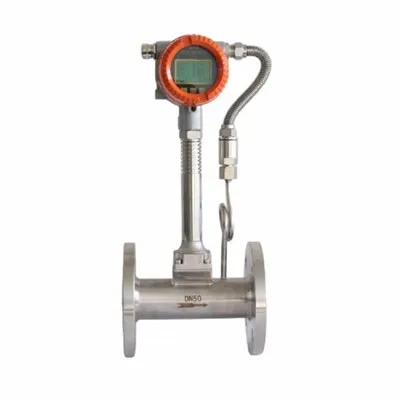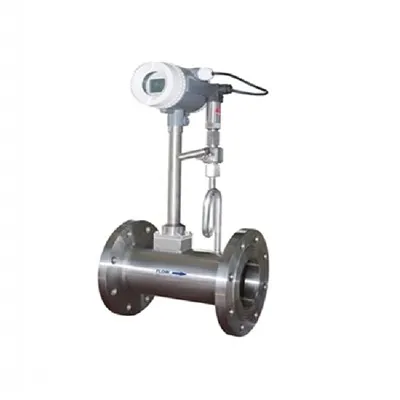


HY Field Instrument Co., Ltd. has been focusing on field instruments for more than ten years. Our product lines include flowmeters, level meters, pressure transmitters, analytical instruments, etc. The main products include electromagnetic flowmeter, Coriolis mass flowmeter, vortex flowmeter, ultrasonic flowmeter; radar level meter, ultrasonic flowmeter, capacitive pressure transmitter, online density meter, etc.

Our Advantages
Advanced Production Equipment
Automatic welding machines, laser welding machines, argon arc welding machines, electric heating constant temperature ovens, spot welding machines, high and low temperature test chambers, calibration systems, etc. from well-known suppliers can ensure high-precision production of instruments.
Reliable Product Quality
Our company has passed ISO9001 certification, and our products have obtained CE, Exploreproof, Atex, and other certifications, with very high reliability.
Extensive Sales Market
Our products are exported to more than 80 countries and regions including the United States, Germany, France, Italy, Brazil, Chile, Vietnam, Saudi Arabia, and the United Arab Emirates, and have reached annual sales of more than 5 million US dollars.
Comprehensive Service
We provide professional product introduction, technical exchange, product design, troubleshooting, and other services. At the same time, technical and inspection personnel will conduct return visits to customers to continuously improve product experience.


A flow meter is a device used to measure the volume or mass of a gas or liquid. Flow meters are referred to by many names, such as flow gauge, flow indicator, liquid meter, flow rate sensor, etc. depending on the particular industry. However, they all measure flow. Open channels, like rivers or streams, may be measured with flow meters. Or more frequently, the most utility from a flow meter and the greatest variety of flow meters focus on measuring gasses and liquids in a pipe.
Common Types of Flowmeters


Volumetric Flow Meters
Volumetric flow meters operate linearly and make flow measurements by measuring the velocity of the flow. Unlike mass flow meters, volumetric flow meters have minimum sensitivity to viscosity changes and are connected directly to pipelines. The types of volumetric flow meters include positive displacement flow meters, turbine flow meters, electromagnetic flow meters, ultrasonic flow meters, and vortex flow meters.
Differential Pressure (DP) Flow Meters
Differential pressure flow meters use the Bernoulli Equation, which states that the speed of the flow of a fluid increases as its pressure decreases. To take a flow measurement, a differential flow meter places a constriction or obstruction in a pipe that creates a pressure drop across the flow. As more flow passes through the constriction, the pressure drop increases, which is proportional to the square of the flow rate. The pressure sensors of a differential flow meter are placed before and after the constriction to accurately measure the flow rate where the constriction causes a change in the kinetic energy of the flow as it is directed through the flow meter to be measured by a second sensor. Differential pressure flow meters commonly make use of a Venturi tube that is designed to constrict and slow flow. The sub-types of differential pressure flow meters are orifice plate, flow nozzle, Venturi flow meter, and rotameter.
Velocity Flow Meter
Velocity flow meters are volumetric flow meters that are used to calculate the flow rate by computing the speed of the flow using sensors located along the flow. The accuracy of velocity flow meters depends on the density, cross sectional area of piping, and the velocity of a fluid remaining constant. Any type of device that can directly measure fluid velocity is able to measure the volumetric flow rate of a fluid in a pipe that has a set cross sectional area. The types of velocity flow meters include turbine and vortex flow meters.
Positive Displacement (PD) Flow Meter
Positive displacement flow meters pass fluids through a series of gears or gears in a chamber. They are a type of mechanical flow meter where fluids displace components in the meter, which is used for flow measurement. They consist of a chamber that is placed in the flow that blocks the movement of a fluid. In the chamber are rotating mechanisms that permit passage of a fixed amount of a fluid. The number of fixed amounts that pass through the chamber helps determine the volume of the fluid with the rate at which the mechanism turns being the flow rate. Positive displacement flow meters are used for measurements when straight pipe is not available or as a replacement for turbine flow meters and paddle wheel sensors when there is too much turbulence in the flow.
Mass Flow Meters
While volumetric flow meters measure the velocity of the flow of gases and liquids, mass flow meters determine the flow rate by measuring the convective transfer of heat on the surface of the flow using temperature sensors in the flow or attached to the piping. They are direct measurement devices capable of measuring a wide range of temperatures with precision and accuracy. Mass flow meters are suitable for use with a variety of fluids including slurries and other viscous materials, non-conductive fluids, and other mass fluids by their density. Two common types of mass flow meters are coriolis and thermal mass.
Digital Flow Meters
Digital flow meters are high tech flow meters that have four components that act like sensors. Included are anemometers, thermistors, and pressure gauge transducers, all of which have direct contact with the flow and measure mass flow, gas temperature, and gas/back pressure. The one external sensor of a digital flow meter is the absolute pressure transducer that produces pressure readings without the influence of atmospheric pressure.
Advantages of Ultrasonic Flow Meters
Advantages of Ultrasonic Flow Meters
Non-Intrusive Measurement
Clamp-on ultrasonic flow meters offer a notable advantage with their non-intrusive measurement capability. Unlike other flow meters, they don't require physical insertion into the pipeline, eliminating contamination and pressure drop risks. The meter's ultrasonic waves can collect data without direct contact with the substance in question. Their non-intrusive properties make them well-suited for applications involving sensitive or corrosive materials.
Low Maintenance
Clamp-on ultrasonic flow meters are inherently durable, thanks largely to their non-invasive nature. Their lack of physical contact with the fluid being measured eliminates the usual wear and tear associated with continuous flow monitoring. Ultrasonic flow meters do not contain moving parts, which are typically prone to mechanical failure over time. This unique construction ensures ultrasonic flow meters can withstand rigorous usage when exposed to a variety of conditions without compromising their performance or accuracy. Ultrasonic flow meters have a prolonged service life, providing a cost-effective solution for long-term flow measurement needs.
Application Versatility
Ultrasonic flow meters are exceptionally versatile and capable of effectively handling a broad spectrum of flow rates, making them an ideal choice for numerous applications. These reliable devices offer precise and efficient flow measurement solutions for many industries, including water treatment, chemical processing, and measurement of gases. These meters are also widely used by utility companies distributing water and natural gas to residential homes and apartment buildings. The ability of ultrasonic flow meters to accurately monitor and analyze diverse flow dynamics contributes to improved operational efficiency and optimal resource management in many scenarios. Their non-intrusive nature of clamp-on meters and compatibility with various pipe materials further enhance their versatility and appeal in diverse industrial settings. The in-line meters allow ultrasonic accuracy and long service life in a format that facilitates drop-in replacement of mechanical meters in water utility infrastructure.
High Accuracy and Reliability
No matter the fluids you need to measure, accuracy and precision play an influential role in optimizing fluid transportation and containment. Ultrasonic flow meters provide precise flow velocity measurements with minimal error, ensuring accurate data for your applications.
Advantages of Electromagnetic Flow Meter
Simple Sensory Structure
The electromagnetic Flow Meter consumes low amounts of energy. The meter has no moving fragments in the measuring tube. Also, it has no adjusting parts that obstruct the flow of the fluids flowing through it. Furthermore, no pressure is lost when fluid flow through the device.
Accuracy
The electromagnetic Flow Meter device measures the suspended liquid-solid two-phase flow, sloping medium, and corrosive medium flows-the accuracy of these measurements attribute to the absence of obstructive flow components inside the measuring tubes. The flowing fluids get in contact with only the lining of the measuring tube and the electrode.
Volumetric Nature
The device is a volumetric measuring device. During the measurement process, the device is not affected by the measured medium's density, viscosity, and temperature within a specific electrical conductivity range. Once calibrated by water, the gadget determines other conductive liquids' flow rates.
Application of Flowmeter
Flow Meters for Industrial Plants
Industrial gas flow meters must be rugged, packed with features and options, and ready to measure out of the box. Plant operators must often keep the process gas flow uninterrupted in order to keep production running. Shutting down production is costly and inefficient.

Flow Meters for Oil & Gas Industry
Beyond traditional oil and gas extraction techniques, the Oil & Gas Industry has been booming in the United States and around the world since the demand for shale oil has led to horizontal fraction drilling all over the world. This drilling is happening both on and offshore to tap into vast quantities of resources trapped in the porous shale deposits deep underground and under the seabed. The flowback from shale oil plays has manydifferent components that must undergo a process of separation in order to isolate the resources for use. Once separated, the byproducts are often stored in tanks before being transported for distribution and sale. Thermal mass flow meters have been used as oil and gas flow measurement devices in applications to measure tank vent and flash gas during storage.
Flow Meters for Pure Gas Applications
Industrial customers of all types rely on specialty gas producers to supply them with the pure or mixed gases that they need for their processes. For instance, car manufacturers often need large quantities of nitrogen, argon, oxygen, or other gases to complete processes such as nitrogen blanketing, argon for high-quality welding of vehicle body panels or chassis, and oxygen for reflow soldering to improve process consistency and reduce nitrogen consumption. Specialty Gas Producers manufacture and store large quantities of pure and mixed gases in tank storage facilities across the country. Leaks from these tanks can cause possible environmental damage, impose regulatory repercussions, and cost the producer from lost product. Maintaining a leak-free system of storage and transfer is paramount to keeping costs down.

Working Principle of Flowmeters
Turbine Flow Meters
Turbine flow meters use the mechanical rotation of a rotor that is placed in the flow to determine the flow rate with the rotation of the rotor being proportional to the velocity of the flow. They are used with clean and viscous liquids and have an accuracy of 0.5%. Turbine flow meters are classified as rotating vane flow meters that include paddle wheel flow meters and Pelton wheel flow meters, each version of which has a different shaped rotor. The angled, twisted, or blade rotor is parallel to the flow and faces it straight on. As the flow moves through the pipe, the turbine spins, the motion of which is electronically detected by a magnetic pickup. The frequency output from the pickup is used directly or converted to an analog signal.
Electromagnetic Flow Meters
Electromagnetic flow meters, also known as mag meters, electromag meters, and magnetic flow meters, use electromagnetic induction to measure liquid velocity. With an electromagnetic flow meter, electrodes are placed in the flow that create a magnetic field and read the voltage of the flow as it passes by the electrodes. The principle of electromagnetic flow meters is based on Faraday's law that states that a conductor moving through a magnetic field produces an electric signal that is proportional to the velocity of the flow. As a fluid flows through the magnetic field of the electrodes, conductive particles in the fluid change the voltage of the magnetic field. The variation of the voltage is used to measure and calculate the velocity of the flow.
Vortex Flow Meters
Vortex flow meters measure fluid velocity using the von Kármán effect, which states that when a flow passes a body, a pattern of swirling votives is generated. In a vortex flow meter, a shredder bar is placed in the flow that causes the fluid to separate and form alternating differential pressure or vortices on the back side of the bar. The vortices cause a sensor to oscillate at a frequency that is proportional to the velocity of the fluid. The sensing element converts the rate of oscillation into an electrical signal that is converted to a velocity reading.
Ultrasonic Flow Meters
An ultrasonic flow meter measures fluid velocity by sending ultrasonic waves across the flow in the direction of the flow and in the opposite direction of the flow. The ultrasonic waves and the velocity of the flow are combined to calculate the flow rate. The structure of an ultrasonic flow meter includes two transmitters and two receivers with one of each on opposite sides of the pipe at a measured distance from each other. With an ultrasonic flow meter, sound waves are sent into the flow using transducers that make direct contact with the flow or uses clamp on transducers that are connected to the exterior of the pipe. Alternating bursts of ultrasounds are measured to determine the time it takes for sound to travel between the transducers. The difference in the transit times is proportional to the velocity of the flow.
Maintenance Tips for Flowmeter
Magnetic Flow Meter

Daily Maintenance
Only needs to perform periodic visual inspections of the meter, check the surrounding environment of the meter, sweep away dust and dirt, ensure there is no water and other substances, check whether the wiring is in good condition, and check whether there are newly installed strong electromagnetic field equipment or newly installed wires near to the meter. If the measuring medium is likely to contaminate the electrode or deposit or scale in the wall of the measuring tube, it should be cleaned and cleaned regularly.
Fault Finding
When the flowmeter is put into operation or it is found that the meter is not working properly after a period of normal operation, first check the external conditions of the flowmeter, such as whether the power supply is good, whether the pipeline is leaking or not in a full state, whether there are bubbles in the pipeline, whether the signal cable damaged, whether the output signal of the converter (that is, the input circuit of the subsequent instrument) is open. Remember to dismantle and repair the flowmeter blindly.

Electromagnetic Flow Meter
Maintenance for electromagnetic meters is quite simple - provided the initial installation of the meter is accurate and the integrity of the greater system is maintained. For example, pressure loss in an area of plumbing will lead to issues of flow meter accuracy, as will cavitation. In terms of specific flow meter maintenance, be sure to practice the following:
Use flow sensors specific to or compatible with the liquids you're measuring. Different mag meters will have different electrode distances (i.e., length of conductor) specific to more or less viscous liquids. This could impact readings significantly.
Orient mag meters for upstream or downstream flow measuring, at an upward or downward angle. Horizontally level installations can result in consistency problems as the meter tries to get an accurate reading during flows and surges.
Isolate wiring from other circuits to avoid interference, which can disrupt flow monitoring and sensor readings.
When insulating, don't cover the coil housing or electronics. This can cause overheating, which may short the device.
Verify calibrations in consistent intervals. Also, be sure to designate a unique calibration number for each coil drive frequency for sensors capable of driving the magnetic coils at multiple frequencies.
Perform meter verifications as mandated by OEM maintenance specifications.
Our Certificate
In order to ensure the quality of our products, our company has passed ISO9001 quality system certification, and our products have obtained CE, Exploreproof, Atex, and other certifications.


Our modern factory is equipped with multiple production lines. The flow meters, liquid level meters, pressure transmitters, temperature sensors, and transmitters we produce are widely used in the petrochemical industry, natural gas, environmental engineering, pharmaceutical engineering, food engineering, water treatment, Marine engineering, and other fields.
Ultimate FAQ Guide to Flowmeters
Hot Tags: steam flowmeter, China steam flowmeter manufacturers, suppliers, Flowmeter, Steam Flowmeter, LUGB Vortex Flowmeter, LUGB Flowmeter, Temperature And Pressure Compensate Flowmeter, Vortex Flowmeter