

The error rate of a liquid density meter is a crucial factor that determines its accuracy and reliability in measuring the density of various liquids. As a leading supplier of liquid density meters, we understand the significance of this parameter and strive to provide our customers with high - precision instruments. In this blog, we will explore what the error rate of a liquid density meter is, what factors influence it, and how our products fare in terms of error rates.
What is the Error Rate of a Liquid Density Meter?
The error rate of a liquid density meter refers to the deviation between the measured density value and the actual density value of a liquid. It is typically expressed as a percentage or in units of density (such as kg/m³ or g/cm³). For example, if the actual density of a liquid is 1.0 g/cm³ and a density meter measures it as 1.01 g/cm³, the absolute error is 0.01 g/cm³. If we calculate the relative error percentage, it would be (0.01 / 1.0) * 100% = 1%.
A low error rate indicates a more accurate density meter. In various industrial applications such as chemical manufacturing, food and beverage production, and oil and gas exploration, a high - precision density measurement is often required to ensure product quality, process control, and safety.
Factors Affecting the Error Rate
1. Temperature
Temperature has a significant impact on the density of liquids. As the temperature changes, the volume of the liquid expands or contracts, leading to a change in its density. Most liquid density meters are calibrated at a specific reference temperature. If the measurement is taken at a temperature different from the calibration temperature, it can introduce errors. For example, water has a density of 1 g/cm³ at 4°C, but its density decreases as the temperature rises above 4°C. To minimize temperature - related errors, some of our density meters are equipped with temperature - compensation mechanisms.
2. Viscosity
The viscosity of a liquid can also affect the error rate of the density meter. Highly viscous liquids can cause resistance to the movement of the measuring components in the density meter, resulting in inaccurate readings. For instance, in the case of a Fork Type Density Meter, the presence of a highly viscous liquid can slow down the vibration of the fork, leading to a deviation in the measured density. Our density meters are designed to handle a wide range of viscosities, but for extremely viscous liquids, additional considerations may be necessary.
3. Chemical Composition and Contaminants
The chemical composition of the liquid and the presence of contaminants can impact density measurements. Different chemicals have different densities, and if a liquid has a complex chemical composition, it may be more challenging to measure its density accurately. Contaminants such as particles, dissolved gases, or impurities can also change the density of the liquid. For example, in a chemical process where there are multiple reactants and by - products, the density meter may need to be carefully calibrated to account for these variations.
4. Calibration and Installation
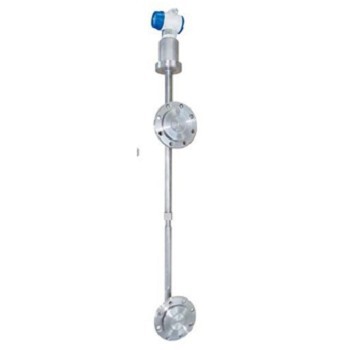
Improper calibration and installation of the density meter can lead to high error rates. Calibration should be carried out regularly using reference liquids with known densities. If the calibration is not done correctly, the density meter will give inaccurate readings. Similarly, incorrect installation, such as improper orientation or mounting, can also affect the performance of the density meter. Our installation and calibration guidelines are provided to ensure the proper setup of our Online Liquid Density Meter and Online Density Transmitter products.
Our Liquid Density Meter's Error Rate Performance
We take pride in the high - precision performance of our liquid density meters. Our products are engineered to have a low error rate, which can meet the strict requirements of different industries. Through advanced manufacturing processes and continuous research and development, we have been able to improve the accuracy of our density meters over the years.
For example, our Online Density Transmitter is designed with high - quality sensors and signal - processing circuits. It can achieve an error rate as low as ±0.001 g/cm³ under normal operating conditions. This high - level accuracy is crucial for applications where even the slightest deviation in density measurement can have a significant impact on the product quality or process efficiency.
Our Fork Type Density Meter also features a fast response time and good stability. Its advanced design minimizes the influence of environmental factors, ensuring a relatively low error rate even in challenging working environments. Whether it is used in a laboratory for precise density analysis or in an industrial production line for real - time monitoring, our fork - type density meter can provide reliable density measurement results.
Importance of Low Error Rate in Different Industries
1. Chemical Industry
In the chemical industry, accurate density measurement is essential for process control, quality assurance, and safety. For example, in the production of polymers, the density of the polymer solution can affect its molecular weight and physical properties. A density meter with a low error rate can help ensure that the polymer production process is stable and the final product meets the required quality standards.
2. Food and Beverage Industry
In the food and beverage industry, density measurement is used to determine the sugar content, alcohol content, and concentration of various ingredients. For instance, in the brewing process, the density of the wort can be used to monitor the fermentation progress. An accurate density meter can help brewers produce consistent - quality beer.
3. Oil and Gas Industry
In the oil and gas industry, density measurement is used for reservoir characterization, pipeline flow monitoring, and product quality control. The density of crude oil and refined products can vary depending on their composition, and accurate density measurement is crucial for accurate custody transfer and quality assessment.
Choosing the Right Liquid Density Meter Based on Error Rate Requirements
When selecting a liquid density meter, it is important to consider the specific error rate requirements of your application. For applications where high precision is required, such as in laboratories or high - end manufacturing processes, you may need a density meter with a very low error rate. On the other hand, for applications where a certain degree of tolerance can be accepted, a density meter with a relatively higher error rate may be sufficient and more cost - effective.
We offer a wide range of liquid density meters to meet different customer needs. Our sales team can provide professional advice based on your specific requirements, helping you choose the most suitable density meter for your application.
Conclusion
The error rate of a liquid density meter is a key parameter that reflects its measurement accuracy. Understanding the factors that affect the error rate and choosing a density meter with an appropriate error rate for your application is crucial. As a leading supplier of liquid density meters, we are committed to providing our customers with high - quality products with low error rates.
If you are interested in our Fork Type Density Meter, Online Liquid Density Meter, or Online Density Transmitter, please feel free to contact us to discuss your specific requirements and start the procurement process. We are looking forward to cooperating with you to provide the best density measurement solutions.

References
- ASTM International. (2023). Standard test methods for density, relative density (specific gravity), or API gravity of crude petroleum and liquid petroleum products by hydrometer method.
- ISO. (2022). ISO 12185:2022. Crude petroleum and petroleum products — Determination of density — Oscillating U - tube method.


