

Hey there! As a supplier of turbine flowmeters, I've seen firsthand how these nifty devices can revolutionize flow measurement. But like any technology, they've got their limitations. Let's dive into what those are.
1. Viscosity Sensitivity
One of the biggest drawbacks of turbine flowmeters is their sensitivity to fluid viscosity. Turbine flowmeters work on the principle that the fluid flowing through the meter causes a turbine to spin, and the rotation speed is proportional to the flow rate. When the fluid's viscosity changes, it can mess with this relationship.
For instance, if you're using a turbine flowmeter to measure a low - viscosity fluid like water, it'll work great. But if you switch to a high - viscosity fluid like oil, the increased resistance can slow down the turbine. This means that the meter might under - report the actual flow rate. So, if you're in an industry where you deal with fluids of varying viscosities, you've got to be careful. You might need to recalibrate the meter or use a different type of flowmeter altogether.
2. Turbulence and Flow Profile
Turbine flowmeters need a stable and well - defined flow profile to work accurately. When the flow is turbulent, it can cause the turbine to spin erratically. Imagine a river with lots of whirlpools and eddies. The turbine in the flowmeter is like a little boat in that river. Instead of a smooth, consistent spin, it'll be all over the place.
This is a problem in real - world applications. Pipes can have bends, valves, or other components that disrupt the flow. Even the way the fluid enters the pipe can affect the flow profile. To get accurate measurements, you often need to install straight pipe sections upstream and downstream of the flowmeter. But in some industrial settings, space is limited, and it might not be possible to install these long straight sections.
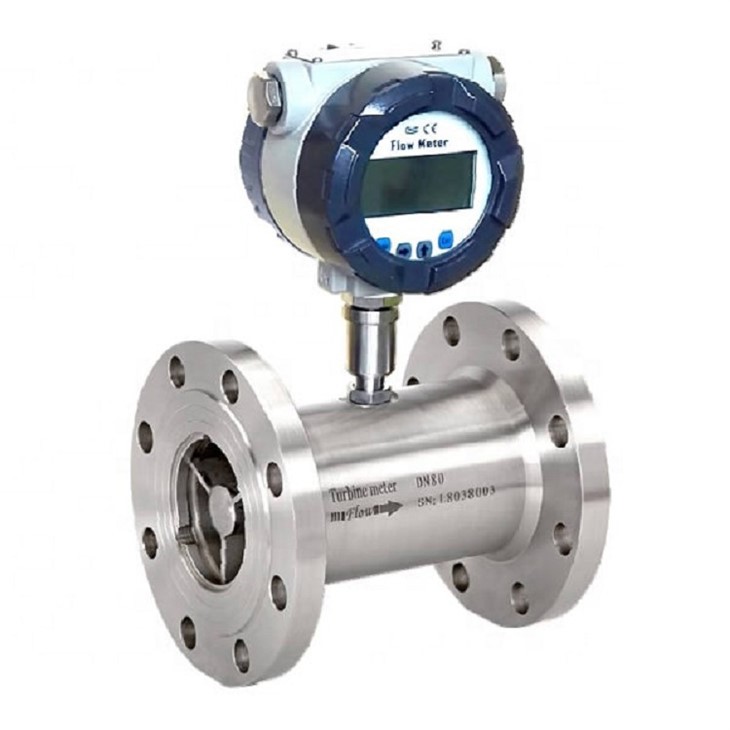

3. Wear and Tear
The turbine inside the flowmeter is a moving part, and like any moving part, it's subject to wear and tear. Over time, the blades of the turbine can get damaged or worn down. This can affect the accuracy of the flow measurement.
The amount of wear depends on several factors, such as the type of fluid, the flow rate, and the presence of particles in the fluid. If you're measuring a fluid that contains abrasive particles, like sand or dirt, the turbine will wear out much faster. And once the turbine is worn, you'll need to replace it. This can be costly and time - consuming, especially in a continuous - operation industrial setting.
4. Reynolds Number Dependence
Turbine flowmeters are highly dependent on the Reynolds number of the fluid. The Reynolds number is a dimensionless quantity that describes the ratio of inertial forces to viscous forces in a fluid. When the Reynolds number is outside the optimal range for the flowmeter, the accuracy can be affected.
In general, turbine flowmeters work best at high Reynolds numbers. At low Reynolds numbers, the viscous forces dominate, and the turbine might not spin as freely. This can lead to inaccurate flow measurements. So, if you're dealing with fluids that have a wide range of Reynolds numbers, you might run into problems.
5. Installation Requirements
Proper installation is crucial for the accurate operation of turbine flowmeters. As mentioned earlier, you need straight pipe sections upstream and downstream of the meter. But there are other installation requirements too.
The flowmeter needs to be installed in the correct orientation. If it's installed upside down or at an incorrect angle, it can affect the turbine's rotation and thus the flow measurement. Also, the meter needs to be properly grounded to prevent electrical interference. Any mistakes in installation can lead to inaccurate readings and even damage to the flowmeter.
6. Limited to Clean Fluids
Turbine flowmeters are not well - suited for measuring fluids that contain a lot of debris or contaminants. The particles in the fluid can get stuck in the turbine, causing it to jam or wear out faster.
For example, if you're in the wastewater treatment industry, where the fluid contains all sorts of solids and debris, a turbine flowmeter might not be the best choice. In such cases, you might want to consider other types of flowmeters, like electromagnetic flowmeters, which can handle dirty fluids better.
7. Cost
Turbine flowmeters can be relatively expensive, especially when compared to some other types of flowmeters. The cost includes not only the initial purchase price but also the cost of installation, calibration, and maintenance.
If you're on a tight budget, the high cost of turbine flowmeters might be a deterrent. And if you need to install multiple flowmeters in a large - scale industrial facility, the cost can add up quickly.
Our Solutions
Despite these limitations, turbine flowmeters still have a lot of advantages. They're accurate, reliable, and can measure a wide range of flow rates. At our company, we offer different types of turbine flowmeters to suit various applications.
For example, if you're in the natural gas industry, our Natural Gas Turbine Flowmeter is designed to handle the specific requirements of natural gas flow measurement. It's calibrated to work accurately with the low - viscosity and high - pressure characteristics of natural gas.
If you're in the food and beverage industry, our Milk Turbine Flowmeter is a great option. It's made from food - grade materials and is designed to handle the unique properties of milk, such as its viscosity and temperature.
And for applications where you need a quick and easy installation, our Tri - clamp Turbine Flowmeter is a good choice. It can be easily connected to pipes using tri - clamp fittings, saving you time and effort.
If you're facing any of the limitations we've discussed here, or if you're just looking for a reliable flowmeter for your application, don't hesitate to reach out. We're here to help you find the best solution for your flow measurement needs. Whether it's choosing the right flowmeter, installing it correctly, or providing maintenance and support, we've got you covered.
References
- Flow Measurement Handbook: Industrial Designs and Applications by Ralph W. Miller
- Principles of Flow Measurement by Richard W. Miller
So, if you're interested in learning more about our turbine flowmeters or want to discuss your specific requirements, feel free to get in touch. We're eager to start a conversation and help you solve your flow measurement challenges.


