

Can an Ultrasonic Level Meter be used in a noisy environment?
Hey there! I'm a supplier of Ultrasonic Level Meter, and I often get asked this question: Can an ultrasonic level meter be used in a noisy environment? Well, let's dive right in and explore this topic.
First off, let's understand how an ultrasonic level meter works. It sends out ultrasonic waves towards the surface of the material whose level it's measuring. These waves bounce back when they hit the surface, and the meter calculates the distance based on the time it takes for the waves to return. This distance is then used to determine the level of the substance in the tank or container.
Now, noise can come from various sources in an industrial environment. There could be the rumbling of machinery, the hissing of steam, or the clanging of pipes. All these sounds create a chaotic acoustic background. So, how does this noise affect an ultrasonic level meter?
One of the main issues is interference. The ultrasonic waves sent out by the meter are a specific frequency. If there are other sounds in the environment that are close to this frequency, they can interfere with the ultrasonic waves. This interference can cause the meter to receive false signals or inaccurate return times. For example, if there's a machine making a high - pitched noise that's similar to the frequency of the ultrasonic waves, the meter might misinterpret this noise as a reflected wave, leading to incorrect level readings.
Another problem is signal attenuation. In a noisy environment, there are often a lot of sound waves bouncing around. These waves can absorb or scatter the ultrasonic waves on their way to and from the surface being measured. As a result, the strength of the reflected wave reaching the meter is reduced. If the signal is too weak, the meter might not be able to accurately detect it, or it could have trouble distinguishing it from the background noise.
However, it's not all doom and gloom. Many modern ultrasonic level meters are designed with features to combat these issues. For instance, some meters use advanced signal processing algorithms. These algorithms can filter out unwanted noise and focus on the genuine ultrasonic signals. They analyze the characteristics of the received signals, such as their frequency, amplitude, and shape, to determine which ones are the reflected ultrasonic waves and which ones are just background noise.
Some meters also have adjustable frequency settings. This allows the user to change the frequency of the ultrasonic waves being emitted. By selecting a frequency that's less likely to be affected by the background noise, the meter can improve its performance in a noisy environment. For example, if the dominant noise in the area is at a certain low frequency, the user can set the meter to emit high - frequency ultrasonic waves.
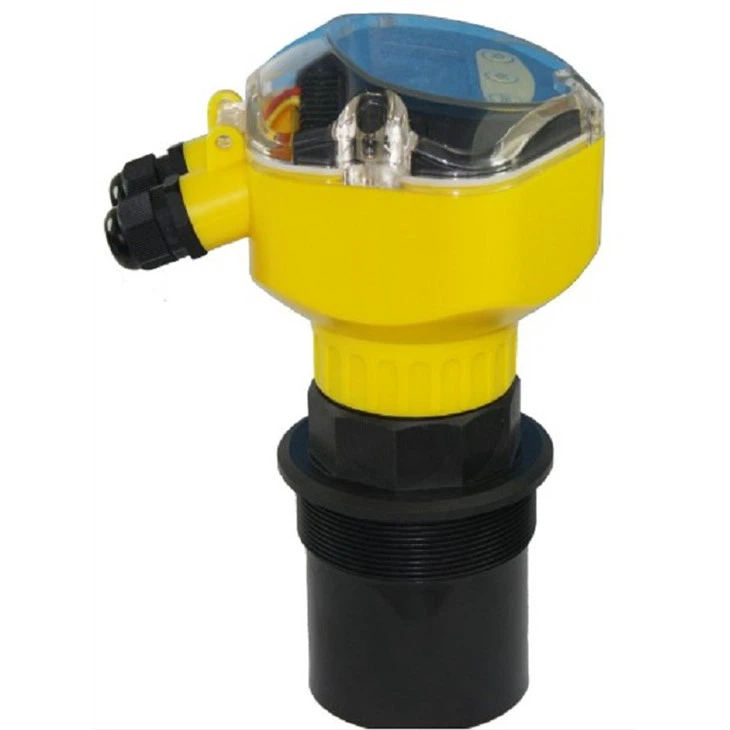

In addition, the physical design of the meter can play a role. Some meters come with special enclosures or shields that help to reduce the impact of external noise. These enclosures can block out a significant amount of the ambient sound, protecting the internal components of the meter from interference.
So, can an ultrasonic level meter be used in a noisy environment? The answer is yes, but with some considerations. Before installing an ultrasonic level meter in a noisy area, it's important to assess the type and level of noise present. If the noise is too intense or if it has a frequency that's very close to the meter's operating frequency, it might be necessary to take additional steps.
One option is to use a different type of level measurement technology in combination with the ultrasonic level meter. For example, you could use a capacitance level sensor or a radar level sensor as a backup. This way, if the ultrasonic meter encounters problems due to noise, you still have another reliable way to measure the level.
Another approach is to modify the environment to reduce the noise. This could involve installing sound - absorbing materials around the area where the meter is located. For example, you could line the walls of the tank or the room with acoustic panels. This would help to dampen the noise and create a more favorable environment for the ultrasonic level meter.
It's also crucial to choose the right model of ultrasonic level meter for the specific application. There are different models available in the market, each with its own set of features and capabilities. Some are better suited for noisy environments than others. As a supplier, I can help you select the most appropriate model based on your requirements.
If you're in an industry where noise is a common issue, such as manufacturing, chemical processing, or wastewater treatment, and you're considering using an ultrasonic level meter, don't hesitate to reach out. We have a wide range of ultrasonic level meters that are designed to handle various levels of noise. Whether you need a meter for a small tank in a moderately noisy workshop or a large storage vessel in a very noisy industrial complex, we've got you covered.
Contact us to discuss your specific needs and let's find the perfect ultrasonic level meter solution for your noisy environment. We can provide you with detailed information about the features and performance of our products, and we'll work with you to ensure that you get accurate and reliable level measurements.
In conclusion, while a noisy environment presents challenges for ultrasonic level meters, with the right technology, proper installation, and some strategic planning, it is possible to use these meters effectively. Don't let noise stop you from taking advantage of the benefits that ultrasonic level meters offer, such as non - contact measurement, easy installation, and high accuracy.
References
- Industrial Instrumentation Handbook, various editions
- Manufacturer's technical documentation on ultrasonic level meters


