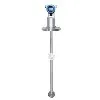
Hey there! As a supplier of Liquid Density Meters, I often get asked about whether there are liquid density meters with automatic sampling systems. Well, the answer is a resounding yes! In this blog, I'll dive deep into the world of these nifty devices, explaining what they are, how they work, and why they're a game - changer in various industries.
Let's start by understanding what a liquid density meter with an automatic sampling system is. A liquid density meter, as the name suggests, is a device used to measure the density of liquids. You can learn more about the general concept of a Liquid Density Meter. The automatic sampling system, on the other hand, is an added feature that allows the meter to collect samples of the liquid automatically at regular intervals or under specific conditions. This eliminates the need for manual sampling, which can be time - consuming, labor - intensive, and prone to human error.
There are several types of liquid density meters that can be equipped with automatic sampling systems. One popular type is the Online Density Transmitter. These transmitters are designed to continuously monitor the density of a liquid in a process line. They work by measuring the pressure difference across a known volume of the liquid. The automatic sampling system in an online density transmitter can be set up to take samples at set times or when certain process parameters change. For example, in a chemical manufacturing plant, the system might be programmed to take a sample every hour or whenever the temperature of the liquid exceeds a certain threshold.
Another type is the Fork Type Density Meter. This meter measures the density of a liquid by vibrating a fork - shaped sensor immersed in the liquid. The frequency of the vibration changes depending on the density of the liquid. When paired with an automatic sampling system, it can efficiently and accurately measure the density of multiple samples over time. In the food and beverage industry, for instance, a fork type density meter with an automatic sampling system can be used to monitor the density of different batches of a product, ensuring consistency in quality.
Now, let's talk about how these automatic sampling systems work. Most of them use a combination of pumps, valves, and sensors. The pump is responsible for drawing the liquid sample from the source, such as a tank or a pipeline. Valves are used to control the flow of the liquid, directing it to the density meter for measurement. Sensors play a crucial role in determining when to take a sample. They can detect changes in parameters like temperature, pressure, or flow rate. For example, if the flow rate of a liquid in a pipeline suddenly drops, the sensor can trigger the sampling system to take a sample to check if there are any issues with the density.
One of the biggest advantages of using a liquid density meter with an automatic sampling system is the accuracy and consistency it provides. Manual sampling can be affected by factors like improper technique or inconsistent sampling intervals. With an automatic system, the samples are taken in a controlled and repeatable manner, leading to more reliable density measurements. This is especially important in industries where precise density control is critical, such as pharmaceuticals and petrochemicals.


In the pharmaceutical industry, for example, the density of a liquid formulation can have a significant impact on its effectiveness. An automatic sampling system ensures that the density of each batch is within the specified range, reducing the risk of product failure. In the petrochemical industry, accurate density measurements are essential for determining the quality and value of crude oil and refined products.
Another benefit is the time and cost savings. Manual sampling requires a lot of manpower, as someone has to physically go to the sampling point, collect the sample, and transport it to the laboratory for analysis. This not only takes time but also incurs additional costs for labor and transportation. An automatic sampling system can operate continuously without the need for constant human supervision, allowing employees to focus on other important tasks.
However, like any technology, there are also some challenges associated with liquid density meters with automatic sampling systems. One of the main challenges is maintenance. The pumps, valves, and sensors in the sampling system need to be regularly checked and calibrated to ensure proper operation. Contamination of the sampling system can also be an issue, especially in industries where the liquid being sampled contains particles or impurities. If the system is not properly cleaned, these contaminants can affect the accuracy of the density measurements.
Despite these challenges, the demand for liquid density meters with automatic sampling systems is on the rise. As industries continue to strive for greater efficiency, accuracy, and quality control, these devices are becoming an indispensable tool.
If you're in an industry that requires accurate density measurements and are considering investing in a liquid density meter with an automatic sampling system, I'd love to have a chat with you. We have a wide range of products that can be customized to meet your specific needs. Whether you're in the food and beverage, chemical, pharmaceutical, or petrochemical industry, we've got the solution for you. Don't hesitate to reach out to discuss your requirements and find the perfect density meter for your operations.
References:
- General knowledge of liquid density meters and automatic sampling systems in industrial applications.
- Technical specifications of Online Density Transmitter, Fork Type Density Meter, and Liquid Density Meter from relevant product literature.